
Photo by Cody Putman, Unsplash.

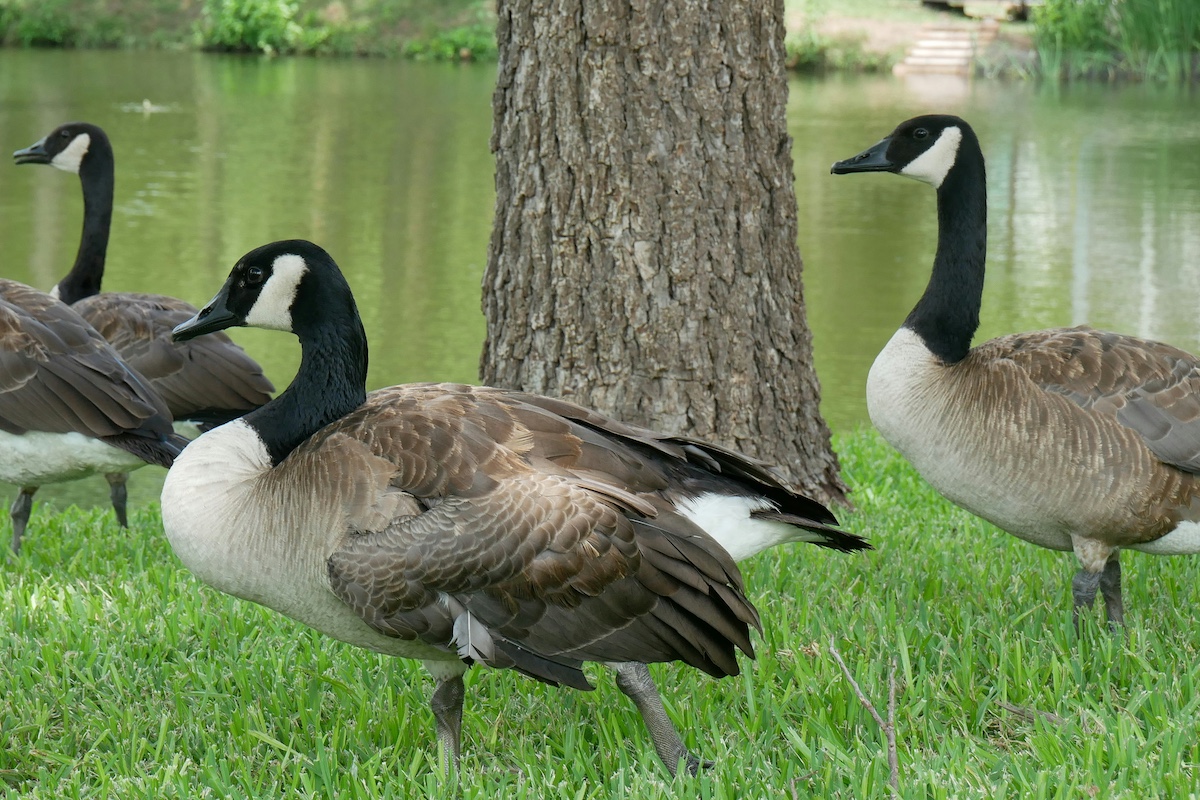
Photo by Cody Putman, Unsplash.
Canada geese are widespread across the state of Illinois and across the region. They are a large species of waterfowl that have adapted in many ways to live closely with humans. They nest in our parking lots and have made great use of our green spaces as habitat. Canada geese are protective parents, often taking over responsibility for the young of other geese.
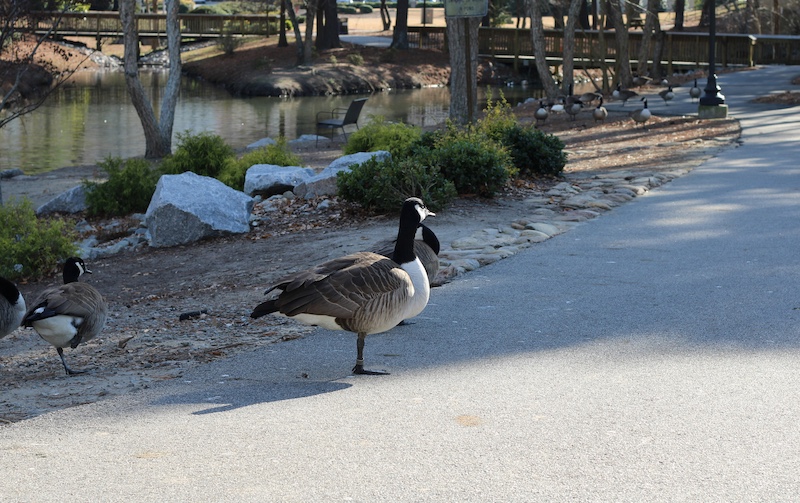
While many people today see geese throughout their communities, that wasn’t always the case. In the past 100 years, there was a time where we were concerned Canada geese might be lost entirely. Now they are abundant year-round in our state. So, while Canada geese present some challenges and are not welcomed by all, they are a conservation success story.
With a growing population of animals can come some challenges, and that is true of Canada geese. Like the wonderful children’s book reminds us, everybody poops, and geese are no exception. Goose feces is a challenge when it becomes very dense as it can make the ground undesirable to park goers, and there are instances where it may contribute to increased bacteria in waterbodies that could contribute to human health concerns.
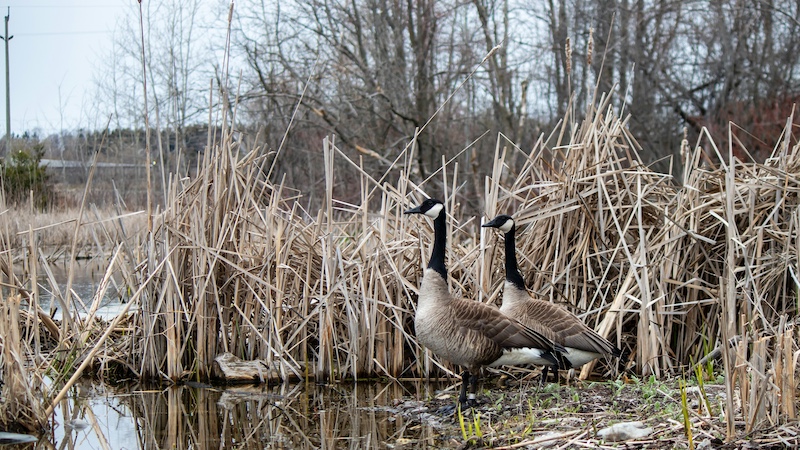
Forbes Biological Station and the Wildlife Veterinary Epidemiology Laboratory at the University of Illinois have worked with the Illinois Department of Natural Resources over the past few years to examine the bacterial communities of temperate-nesting Canada geese and compare those bacterial communities between geese in urban and rural environments, as well as between adult and juvenile geese. We did this by collecting the feces of geese through fecal swabs.
The bacteria in goose feces can come from the bird’s environment, either from its food or the water it inhabits. As a result, we might expect to see different bacterial communities in rural and urban geese since the environment they inhabit is different and the sources of bacteria could differ as well. This is the first step towards understanding what role Canada geese might play in the transport of bacteria among the places they inhabit, which would inform how we think about Canada geese in terms of risks to human and livestock health.
Auriel M.V. Fournier is the Director Forbes Biological Station, Illinois Natural History Survey.





Prześlij pytanie do autora