
Black-throated blue warbler. Photo by Erin Huggins, USFWS.

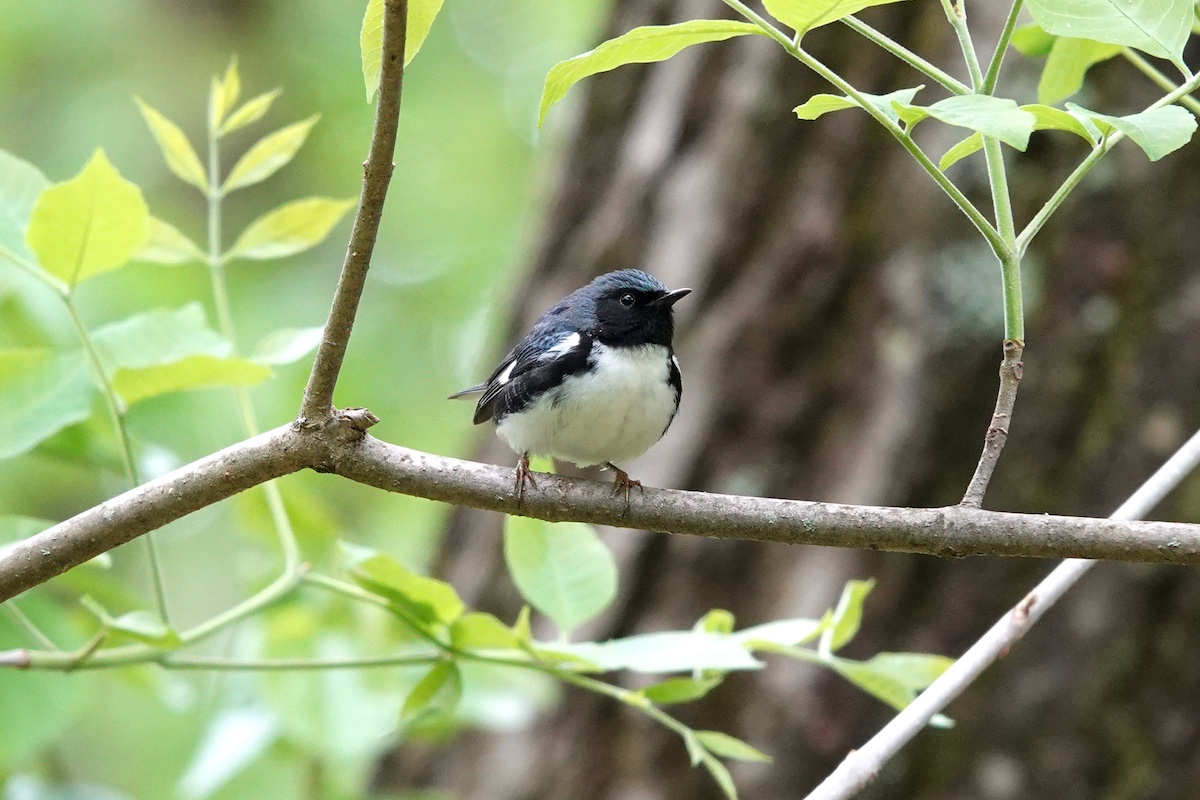
Black-throated blue warbler. Photo by Erin Huggins, USFWS.
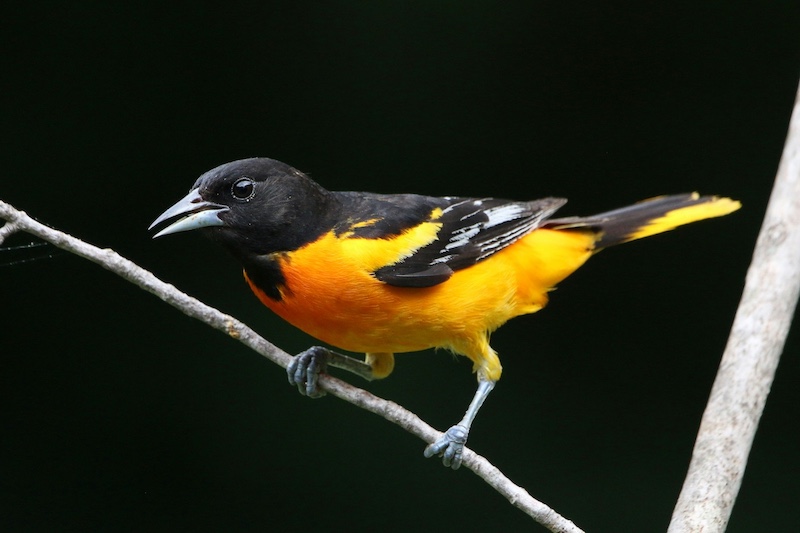
With peak songbird migration heating up, many birdwatchers are grabbing their binoculars to venture outside. Colorful warblers, bright Baltimore orioles and swooping swallows are flying to Illinois either to breed in the summer or pass through. To track migration, check out the Cornell Lab of Ornithology’s BirdCast, a free online resource that predicts bird migration across the United States.
To anticipate returning birds, I would like to look back to fall migration through northern Illinois, particularly during The Urban Birding Festival. In 2025, the second annual Urban Birding Festival took place in Chicago from September 12–14. The festival was organized by Chicago BIPOC Birders, Chicago Bird Alliance, Chicago Ornithological Society, Feminist Bird Club Chicago, Red Hill Birding and the Windy City Bird Lab.
The festival featured more than 80 field trips across Chicagoland, speakers covering topics from a live raptor demonstration to bird biology, and a keynote address from author and illustrator Rosemary Mosco. Celebrating avian wildlife in Chicagoland, the festival brings together birdwatchers of all experience levels to connect with birds and each other.
Last September was my first time attending the Urban Birding Festival, and I was not disappointed. I saw 55 species, including first time species in Illinois, visited areas from southern to northern Cook County and met many amazing birders. The birding community in Chicago is special. But first, let’s talk about the birds.
With a storm moving through Chicago, my first field trip on Saturday morning to Eggers Grove looked questionable. Nevertheless, I hopped in my car and drove south to explore a forest preserve I had not visited before. As soon as I started driving, the skies opened and rain began pouring down. I figured the storm would eventually pass, so I kept driving to the forest preserve on an uncharacteristically empty expressway.
Upon arrival, I found everyone huddled under the park shelter, and after introductions, we chatted about birds and other birding hotspots. After a while, with the forecast still showing one more band of rain, I went to my car for a 20-minute nap. Fortunately, the rain eventually passed, and we began birding at 9:15 a.m., walking through both forest and marsh habitats.
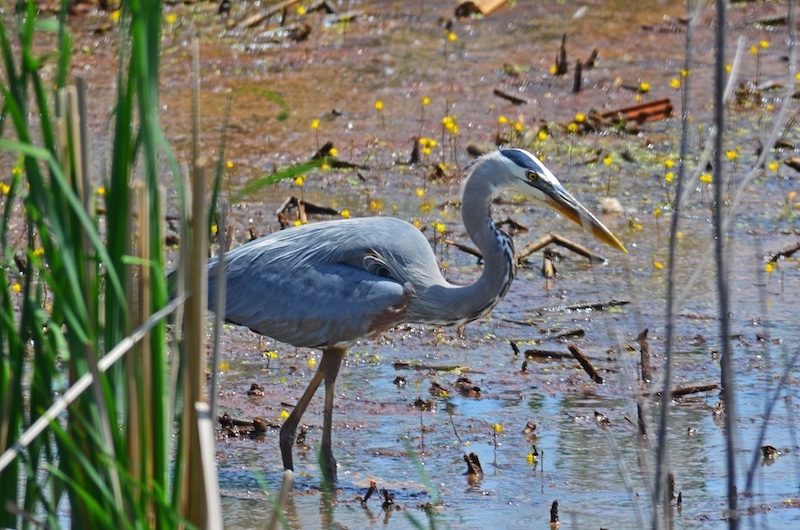
Over the next two hours, we saw 40 species as a group, including eight warbler species and five heron species. We spotted a local rarity, two juvenile little blue herons (Egretta caerulea), which, oddly enough, are all white during their first year. The great blue heron (Ardea herodias) is much more common around Chicago, and we spotted two.
My second field trip on Saturday started at 2 p.m. in Douglass Park, a park on Chicago’s west side. A group met in the parking lot on a sunny afternoon far removed from the rainy and wet morning. Pumping bass music met us from a cookout on the south edge of the lagoon. While not my usual soundtrack for birding, we walked around the northern edge of the lagoon and saw plenty of birds, illustrating how a park can bring together different activities, all unfolding at once in a shared space.
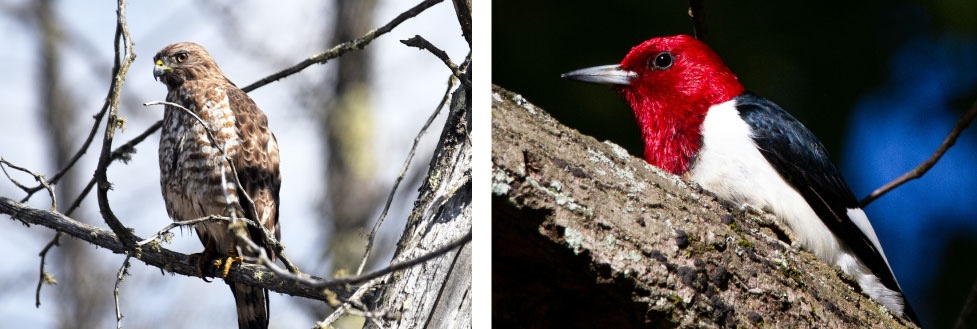
The walk started off with great views of a broad-winged hawk (Buteo platypterus) gliding over us. Then we spotted a red-headed woodpecker (Melanerpes erythrocephalus) high in a tree, my second spotting of the day. By the end of our afternoon stroll we had logged 30 species as a group. I left contented after another great bird walk.
On Sunday morning, I drove to my final field trip at Riis Park in the Belmont Cragin neighborhood of Chicago. After introducing ourselves in the parking lot, we started walking around the lagoon in the southwest corner of the park before heading east along multiple tree lines. We also walked along an old glacial ridge, the historical shoreline of Lake Chicago, an ancient version of what is now Lake Michigan.
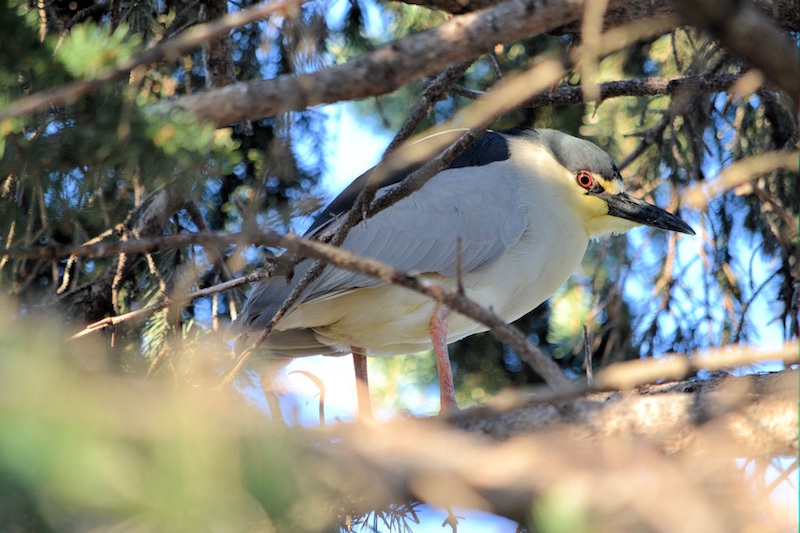
Adding to my heron tally, I observed another local rarity, a juvenile yellow-crowned night heron (Nyctanassa violacea). To distinguish from a juvenile black-crowned night heron (Nycticorax nycticorax), which are common in Chicago due to the breeding colony at Lincoln Park Zoo, note the dark bill and slightly longer legs of the yellow-crowned juvenile. Towards the end of the walk, we spotted a personal favorite of mine, a black-throated blue warbler (Setophaga caerulescens) still in breeding plumage. Matching my tally from the day before, our group finished with 30 species.
Birding is more than simply checking off birds on a list. Since I began birding at 10 years old in Wisconsin, I have embraced the birding community by going on group field trips, joining birding organizations and participating in volunteer opportunities such as the annual Christmas bird count. Having been in the Chicago area for just over a year, I have already been welcomed into the local birding community and met so many great people. Birding during migration last spring, I ran into friendly birders who gave me advice on other hotspots to check out and told me of recent rare sightings.
The Urban Birding Festival exemplified the strength of this community with more than 600 attendees. The keynote by Rosemary Mosco highlighted the community building power of birding. Birders shared stories of their walks earlier in the day over pizza and drinks before listening to the keynote address. If you have never read or listened to any of Rosemary Mosco’s work, I highly recommend it. Her nature themed comics always make me smile, and her presentation was engaging, with a focus on underappreciated city birds.
The field trips also provided important community building. Before strolling through Riis Park, J’orge Garcia, the trip leader and Executive Director of the Windy City Bird Lab, shared how he grew up in the neighborhood and leads a regular series of bird walks to show birding as an opportunity close to home. Garcia had us use the Merlin Bird ID app to share our “Bird of the Day,” which was a great way to engage us and something I will do when leading any future bird walks.
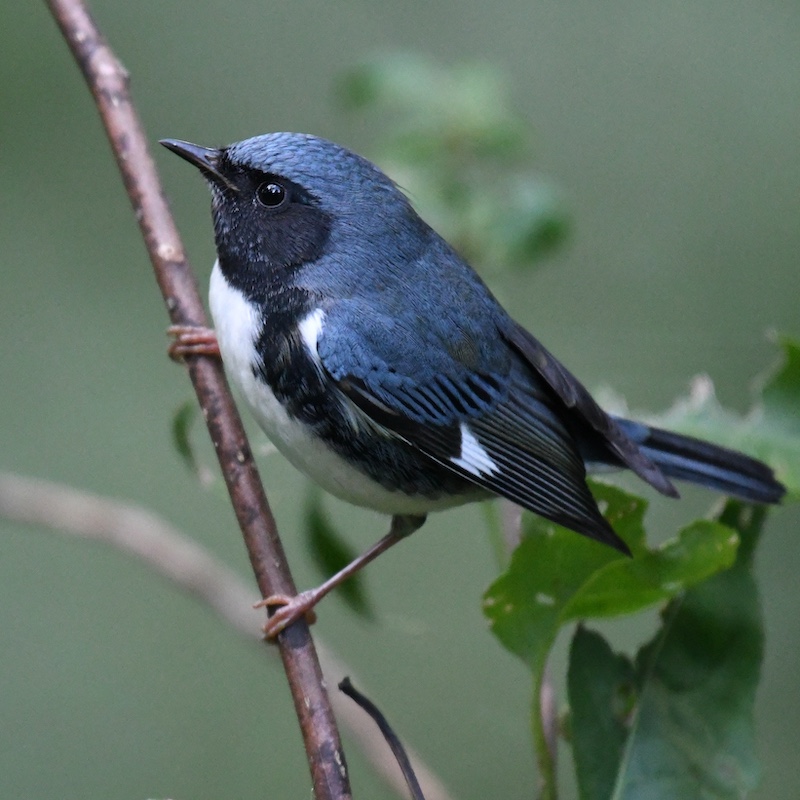
During our walk in Riis Park, seeing a black-throated blue warbler brought me full circle as part of the birding community. About four months previously, I was birding by myself in Columbus Park on a dewy morning. Walking through the restored natural area, I spotted a black-throated blue warbler flitting low to the ground chasing insects. At only 15 feet away, my binoculars afforded me wonderful looks to see the dark blue back and striking black face.
The warbler turned a corner, and after putting my binoculars down, I noticed another birder on the stone path. She walked over and asked if I had seen the black-throated blue warbler. I said yes and told her I was excited—it was my first time seeing one in Illinois. Then we introduced ourselves; her name was Kristen and we talked about birding in the area. We had never met before, but we connected over a small bird migrating through our community.
For the rest of May, I did not see another black-throated blue warbler or Kristen, but I figured I would see both again before too long. On that September day in Riis Park, I stood next to Kristen watching a black-throated blue warbler hopping in a maple tree. The cyclical migration of birds brought the black-throated blue warbler, Kristen and I back together again.
I’m looking forward to birding this May and seeing the wonderful variety of birds that migrate through northern Illinois. More than that, I’m looking forward to walking outside and connecting with my fellow members of the birding community. Nothing brings people together like a shared interest, and I’m thankful for the shared interest and commitment to birds.
W 2026 roku Michael Kamp przyjął stanowisko specjalisty ds. public relations w organizacji Openlands. Wcześniej pracował w zakresie promocji i komunikacji dla Illinois Department of Natural Resources, Wisconsin Department of Natural Resources oraz Nelson Institute for Environmental Studies na Uniwersytecie Wisconsin–Madison. Od zawsze pasjonuje się ptakami i z przyjemnością dzieli się swoją miłością do ptaków i przyrody z innymi.





Prześlij pytanie do autora