Does That Baby Animal Need Help?

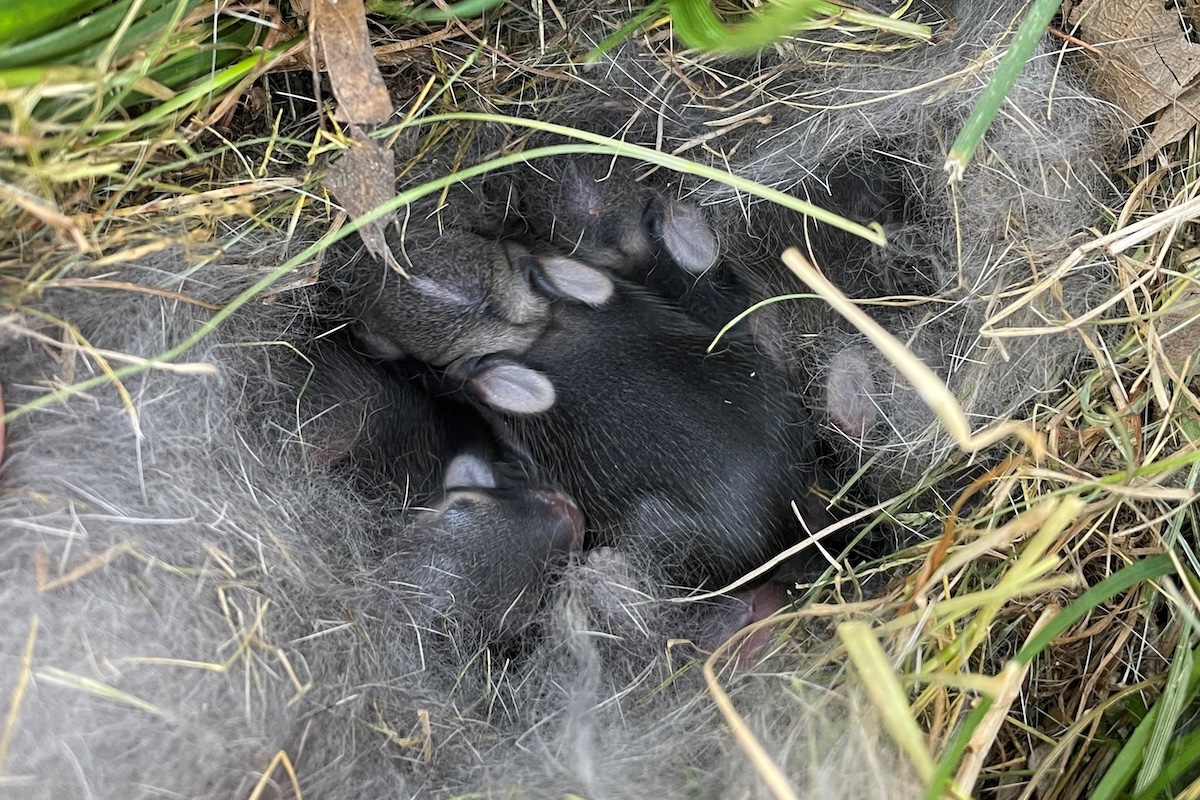
Dark gray tiny baby rabbits snuggled in a fur lined grassy nest.

All photos courtesy of University of Illinois Wildlife Medical Clinic.

As our cities expand and natural habitats shrink, encounters with wildlife are becoming more frequent. Whether you are out in a local forest preserve or in your own backyard, there’s a chance you might stumble upon an injured, ill or orphaned animal.

Your first inclination might be to help but know that untrained individuals should not handle wildlife. Wild animals, including birds, can inflict serious injury. They can also be carriers of disease or parasites that are transmissible to humans and domestic animals.

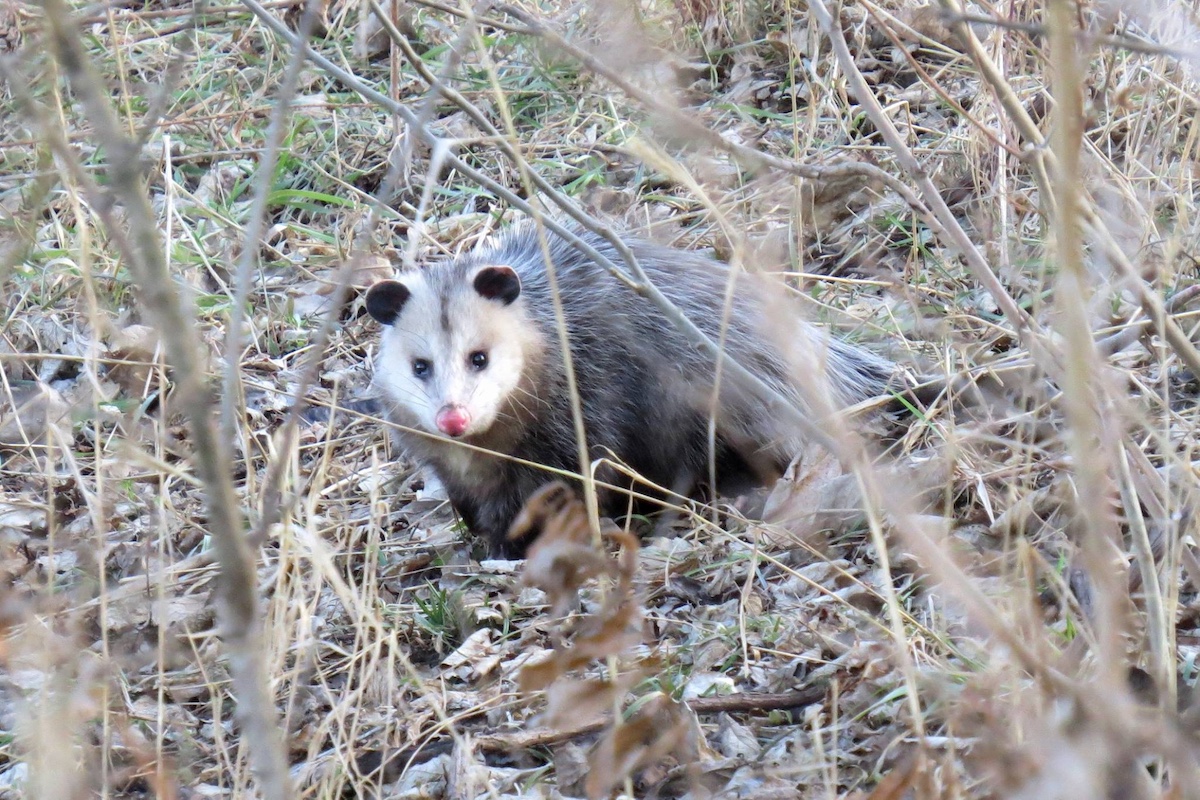
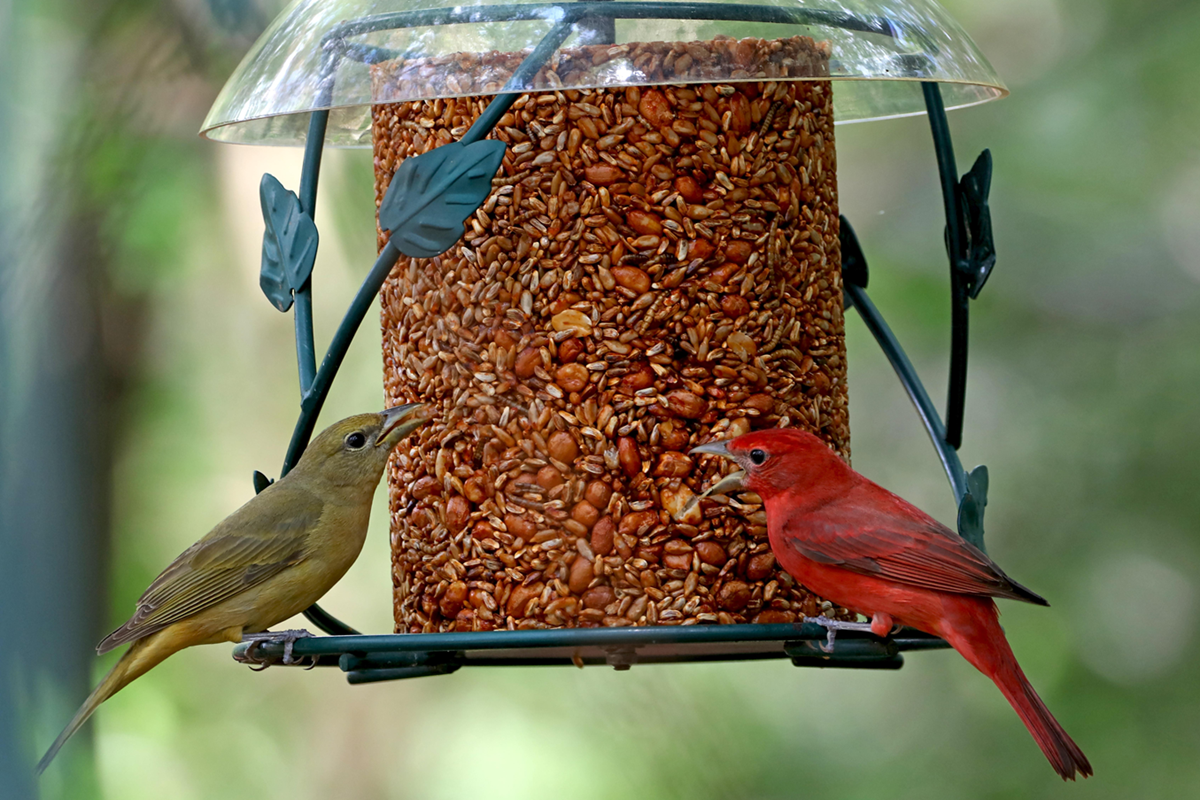
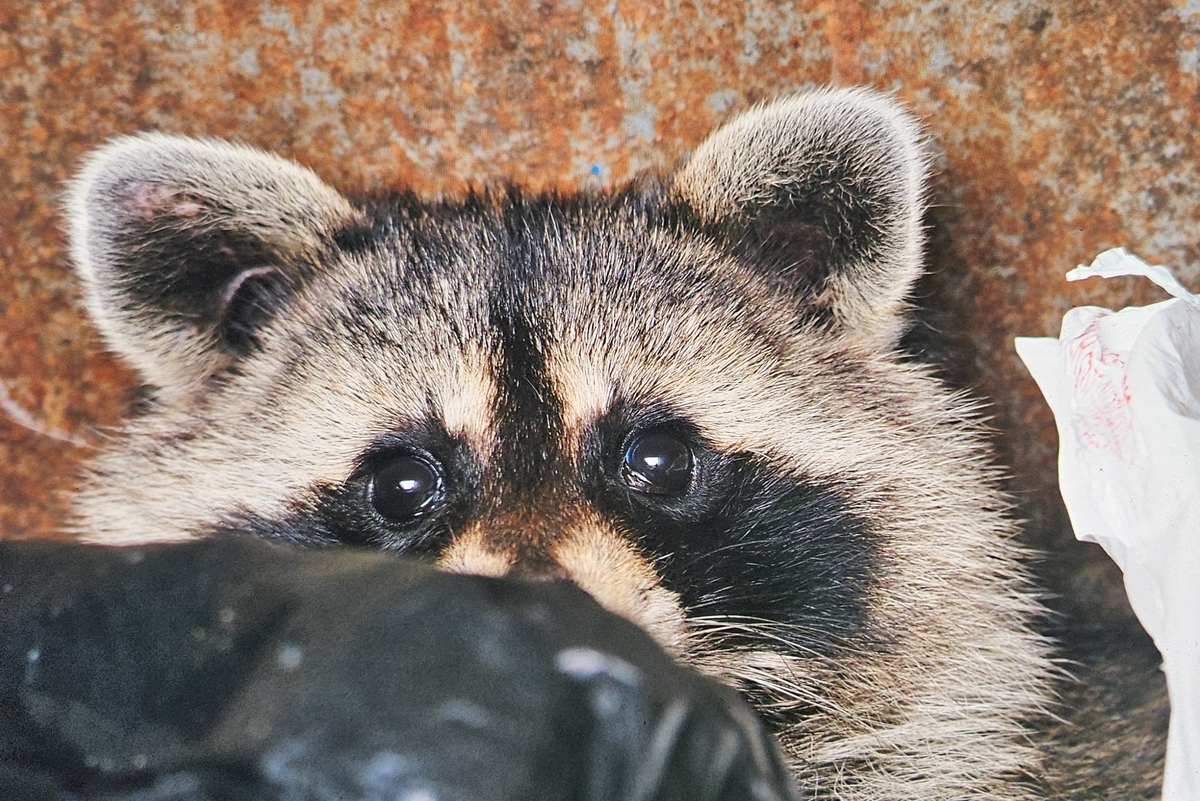
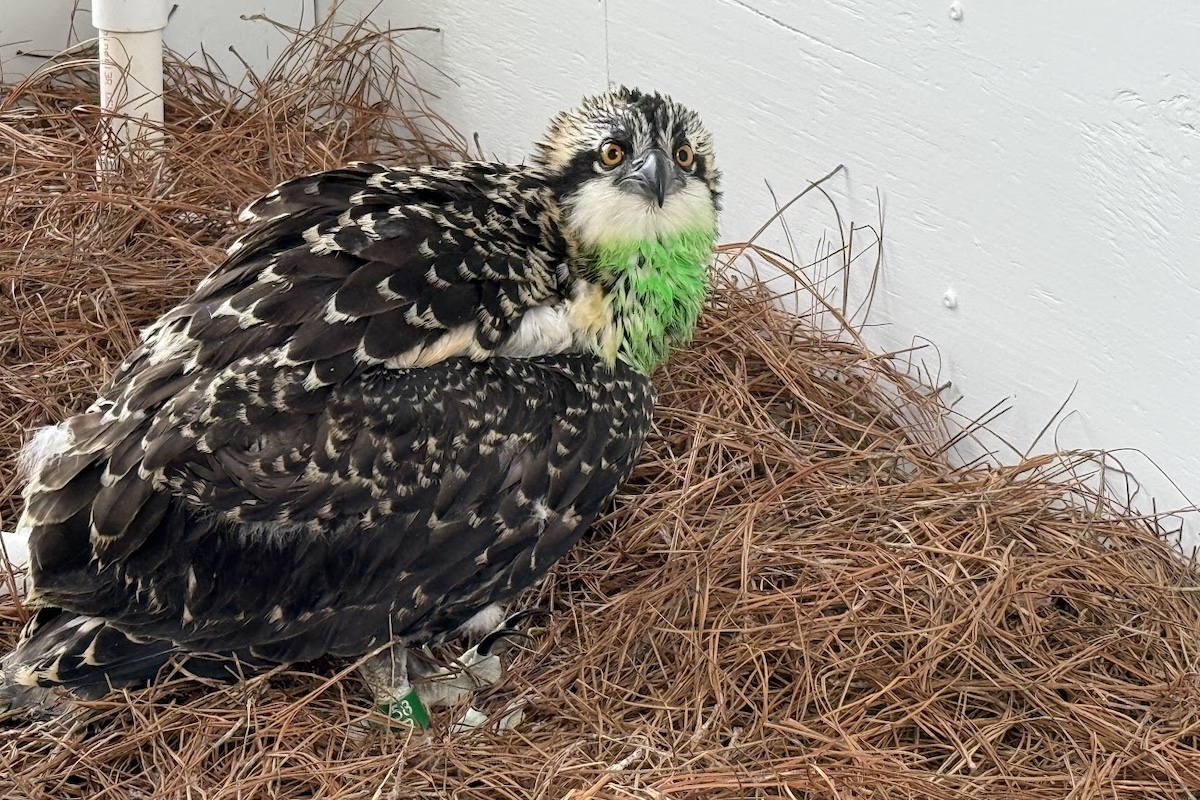
The trained professionals at the University of Illinois Wildlife Medical Clinic in Urbana see more than 2,000 patients annually and around 120 different species. This student-run volunteer clinic accepts ill, injured or orphaned native wild animals. The most common patients include birds of prey, waterfowl, songbirds, eastern cottontails, squirrels, Virginia opossums, raccoons and turtles.
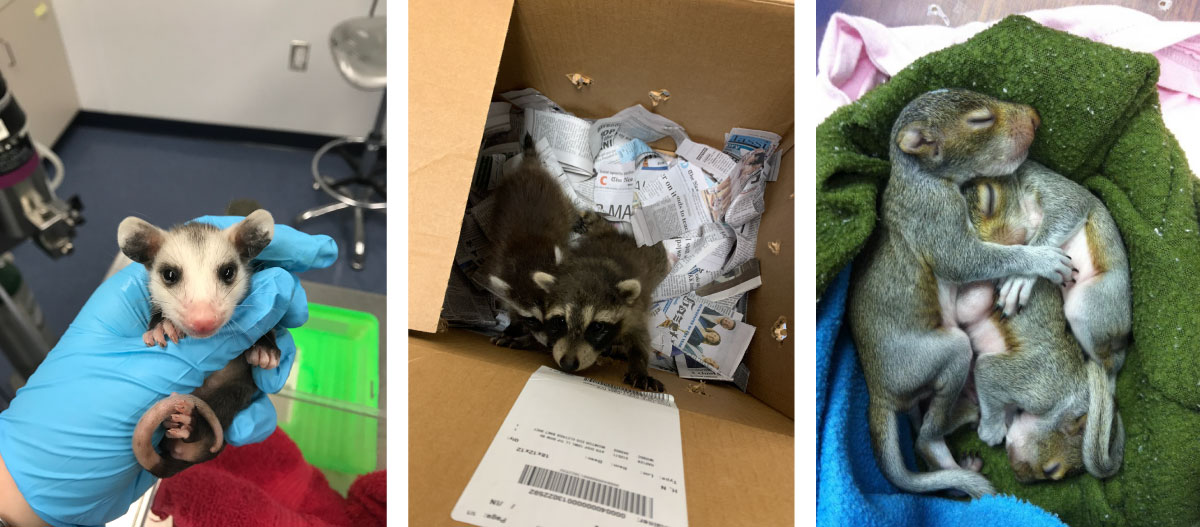
A collage of three photos in a row. The image of the left is of a baby Virginia opossum being held by a blue latex gloved hand of a veterinarian. In the background is an examination room. The middle photo is a view looking down at a cardboard box with newspaper in the bottom and two baby raccoons inside. The photo on the right is of three baby squirrels snuggled in together resting on some fuzzy fabric. The squirrels are so little their eyes haven't opened up yet.
Virginia opossum (left). Raccoons (middle). Squirrels (right).

Injured or ill wildlife end up at the clinic for many reasons. They may have flown into a window, been hit by a vehicle, or attacked by a cat or dog. The animal may have been exposed to poison, glue traps, or trapped in human-made objects such as sporting nets, fishing lines or window wells. In some cases, young animals may be orphaned, ill, not thriving or mistakenly rescued.
Does a Baby Wild Animal Need Help?

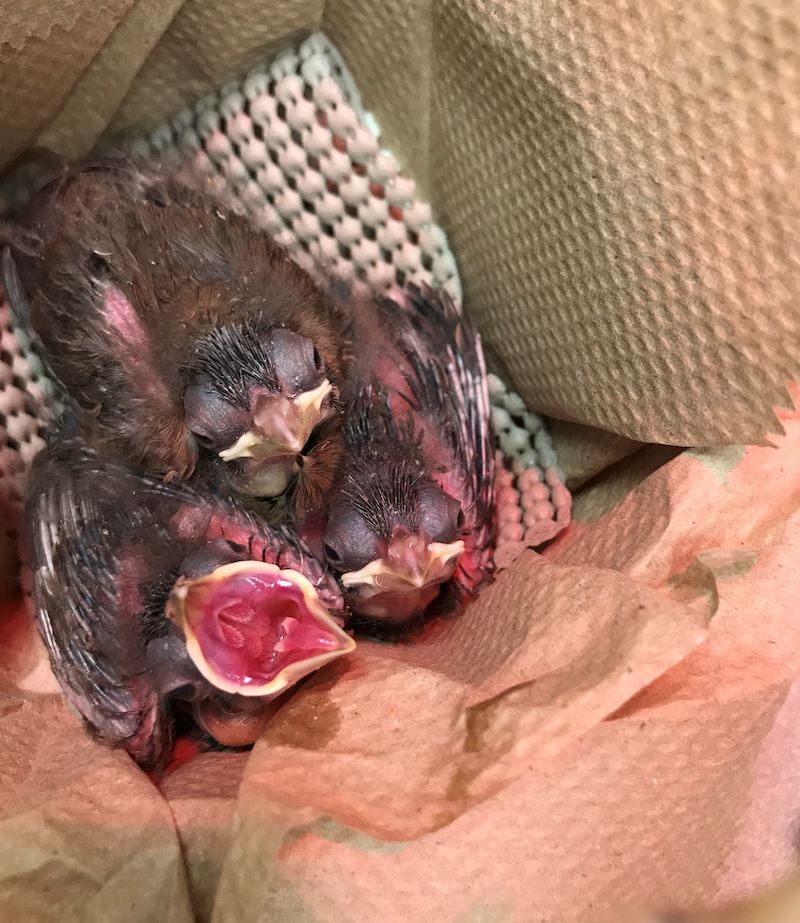
Three baby birds with their eyes open rest in a brown paper towel lined box. One of the birds has its mouth open awaiting some food to be deposited. The birds are fuzzy but some feathers are starting to grow in.
Northern cardinals.

If the baby has its eyes open, is uninjured, and is alert and active, try to reunite it with its parents. Look for a nearby nest or den and gently return the baby to it. Or make a nest and place it in the area or a nearby tree. Observe it from a distance to make sure a parent returns. This may take all day, so don’t get discouraged.

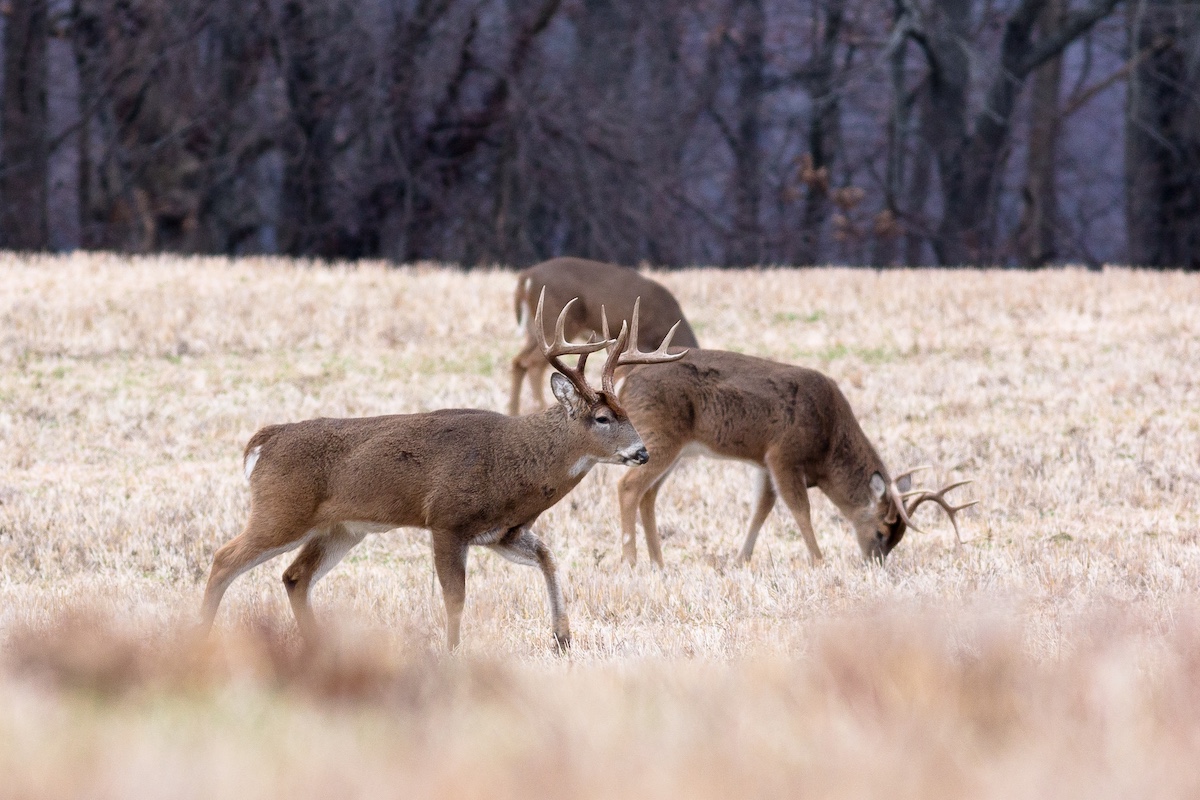
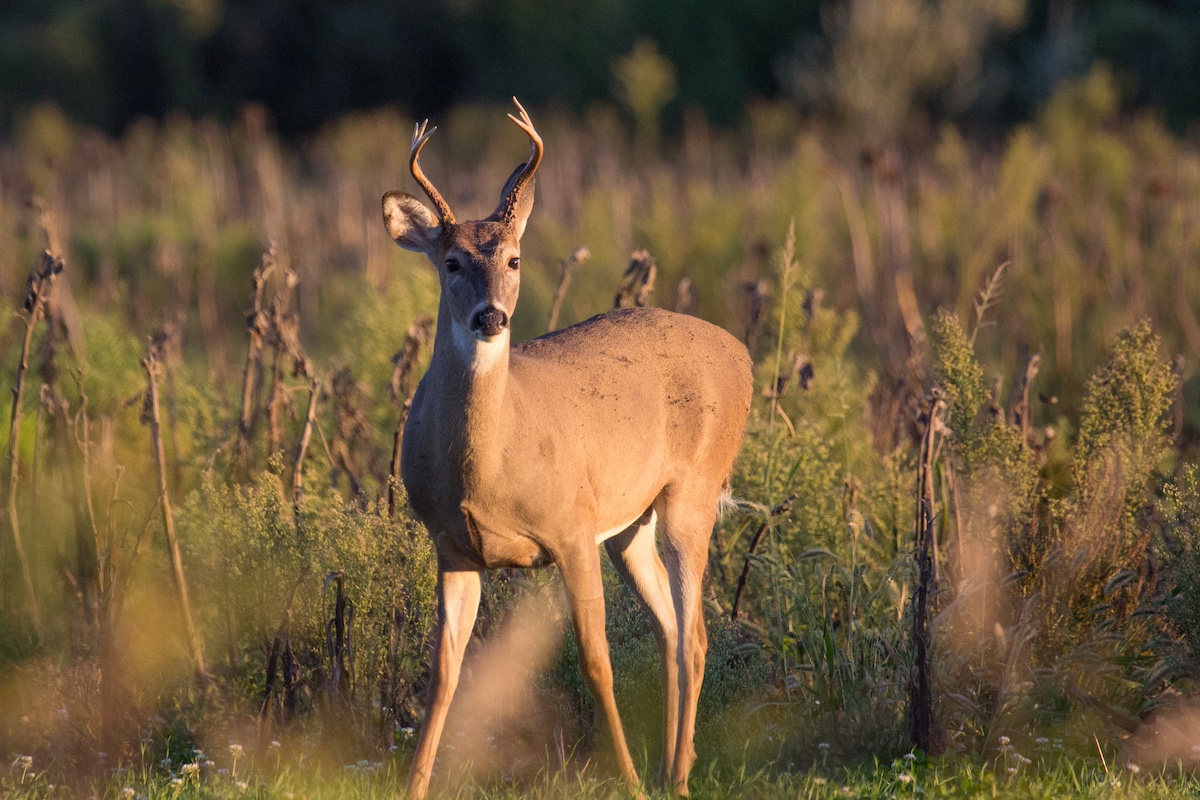
Not all baby animals found alone are orphaned. Many “orphaned” animals that are “rescued” each year by well-meaning people are just temporarily alone while mom is out foraging. For example, doe white-tailed deer leave their fawns unattended for several hours at a time and typically return to nurse their fawns at dawn and dusk. A fawn’s job is to lie quiet and motionless in tall grass or other cover and wait for its mother to return. A similar strategy is also used by eastern cottontails. Moms only visit the nest at dawn and dusk to feed the young. The rest of the day, she is off foraging and staying away from the nest to keep predators away.
Indications that an animal may need help:

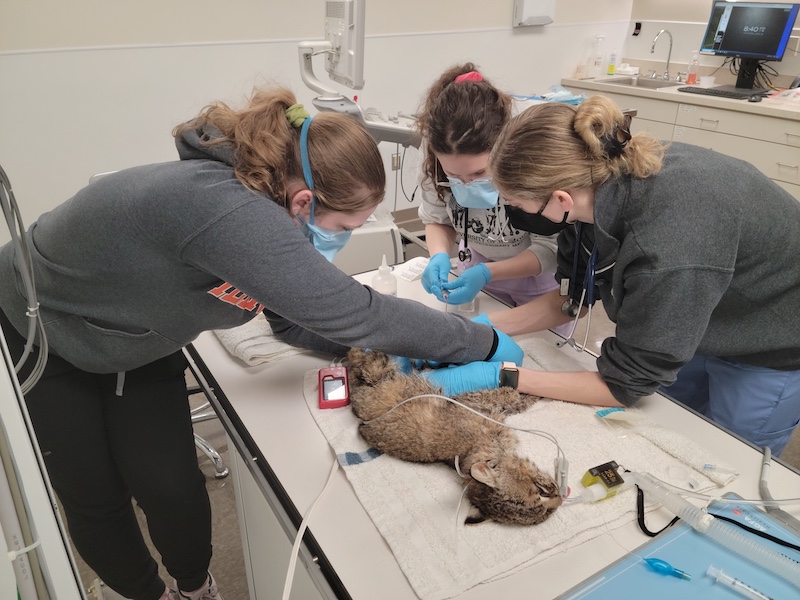
Three veterinarian students complete an examination of a brown and tan bobcat while it lays unconscious on an examination table.
Bobcat undergoing an examination.
  • It is obviously sick or injured.
  • You witnessed it getting hurt or attacked.
  • There are insects on the animal, such as flies and maggots.
  • It is lethargic or unresponsive.
  • The baby is with another dead young or there is a dead adult animal nearby.

In these cases, the animal needs help. Do not try to care for wildlife yourself. Not only is it illegal but it can be dangerous for the animal and in some cases fatal. Wildlife have very specific dietary and housing requirements and untrained care can cause immense stress, habituation, and illness. Many people are not aware that it is illegal to keep wildlife in captivity or as pets in Illinois without a permit. This is because most wildlife in Illinois are protected by the Wildlife Code. If you find an injured or ill animal, please reach out to a licensed wildlife rehabilitator as soon as possible. In the meantime, do not offer food or water, but try to note the exact location where the animal was found as this information will be needed when the animal is ready for release.

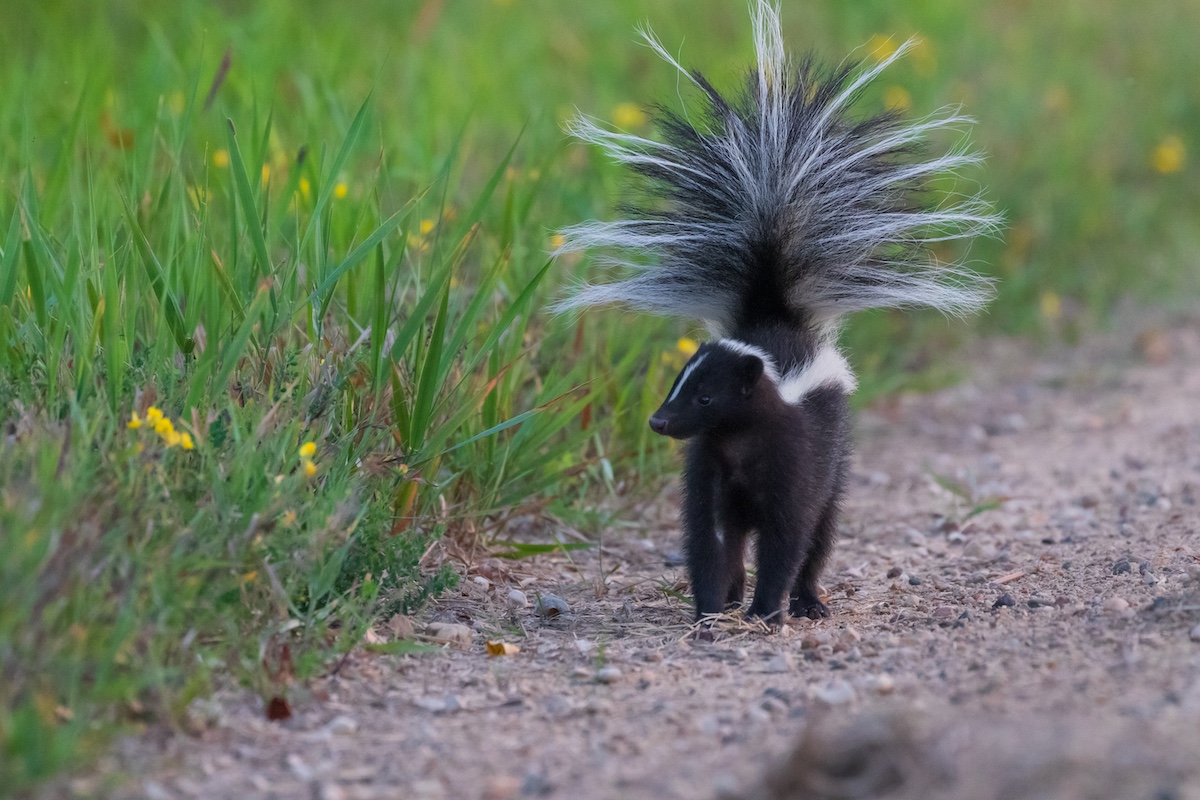
Do not handle bats or skunks. Instead, call your local public health department or animal control for guidance.

More Ways to Support Wildlife

With thoughtful action and informed choices, we can coexist with Illinois wildlife and ensure they thrive alongside us.
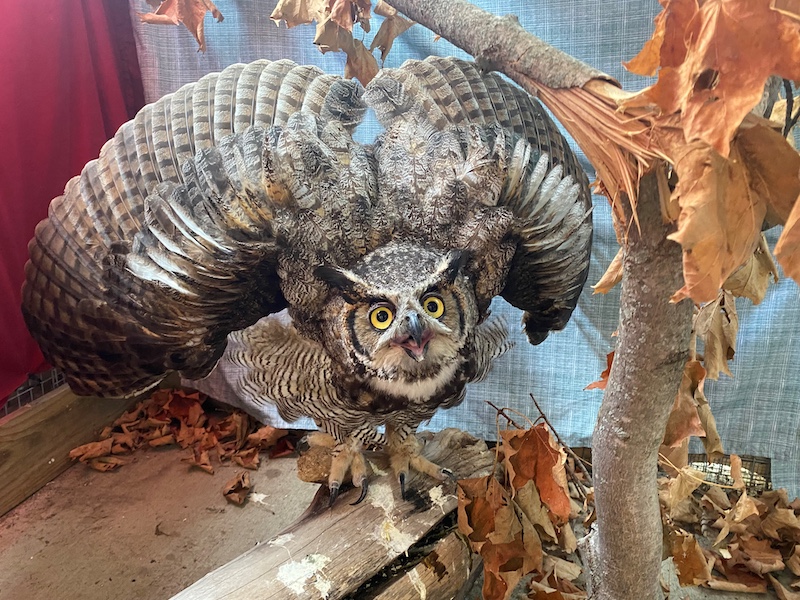
A gray, brown, tan and black great horned owl perches on a log and displays defensive posture. The owl's wings are outstretched above its back and feathers are puffed out at its sides. The result is the owl looking much bigger than it actually is. The owl is in an enclosure lined with sheets of fabric in the background.
Great horned owl in defensive posture.
  • Prevent bird-window strikes with commercially available or DIY window treatments.
  • Keep garbage cans tightly closed, store food in sealed containers, declutter to eliminate areas for pests to hide, and patch up any openings into your house.
  • Choose humane pest control methods. Select methods that target specific species. If chemicals must be used, make sure to follow the instructions and regularly check the areas where you applied the chemicals.
  • To help wildlife crossing the road, slow down while driving, move over if wildlife are present, and help turtles cross the road in the direction they were headed.
  • Make your yard wildlife-friendly. Plant native species to support local ecosystems. Schedule tree trimming in late fall or winter to avoid disturbing nesting animals. Keep cats indoors and check your yard for wildlife before letting dogs outside.
  • Clean up thoroughly after outdoor activities, especially when fishing or hunting.

More Resources


Sydney Oliveira is the Wildlife Medical Clinic Program Coordinator with the University of Illinois College of Veterinary Medicine. She has lived her whole life in Illinois and is very passionate about wildlife conservation. Within her current role she gets to share that passion for wildlife by helping to educate the public on how to co-exist with native wildlife and by helping people to understand why wildlife is important, and why people should care about these unique animals and the habitats that support them.

Udostępnij ten artykuł

Prześlij pytanie do autora

Please complete the verification below to submit your question:


Odkryj naszą rodzinę stron internetowych

Podobne artykuły


An adult male ring-necked pheasant flaps his wings while standing along the edge of a grassland.

Observations on a Pheasant Population


A brown, tan, black and white bobcat sits in a patch of green grass on a hill. Tan grasses are in the background.

What’s for Dinner, Bobcat?


A brown and gray white-tailed deer peers through the understory foliage in a forest.

Maternal Infection with Chronic Wasting Disease Reduces Fetal Head Size


A close-up image of a small brown and tan bobwhite quail chick is camouflaged in the grass.

A small bird with a black face, blue head and back, black wings, and a white breast perches on a tree branch. Green leaves are in the background.

An image of a coyote standing in a field of short grass with its face turned toward the photographer.

The Seasonality of Nuisance Coyote Calls


A close-up of a bumble bee as it approaches white flowers.

Nature’s Seasonal Events: May-July


A bald eagle soars through the sky carrying a silver fish in its talons. A bright blue sky is in the background.

Pesticides of the Past


A close-up image of a brown bat being held by the blue gloved hands of a researcher. The bat has a radio transmitter secured to its back.