
Photo by Bethany H. Warner.

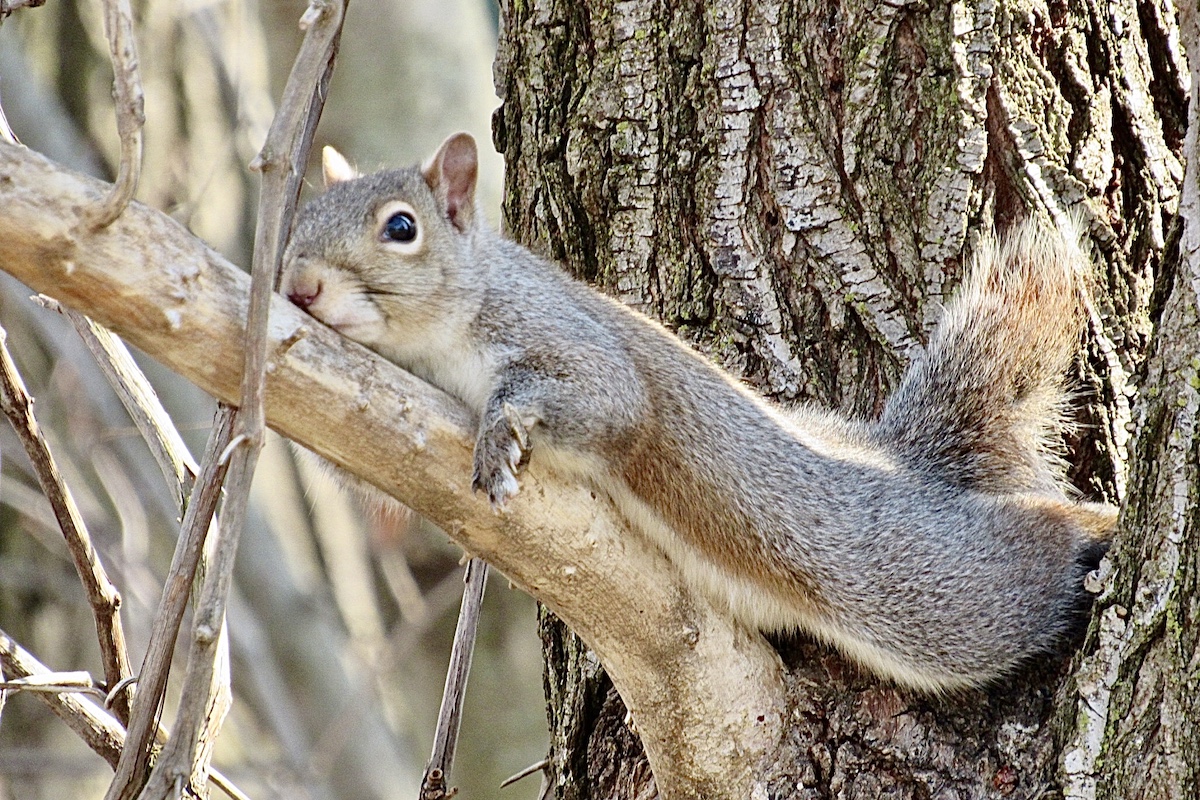
Photo by Bethany H. Warner.
Genetic diversity is important for animals to adapt to environmental changes, increase resilience to disease outbreaks, and reduce the risk of genetic disorders. A major key for maintaining genetic diversity within a population is habitat connectivity, which allows for interbreeding with neighboring populations. However, landscape modification may create barriers for the dispersal of young animals, thereby impacting the genetic diversity of populations or creating isolated populations. Isolated populations may exhibit increased inbreeding and are at increased risk of extirpation or local extinctions.
Eastern gray squirrels (Sciurus carolinensis) are an important prey for many species and promote seed dispersal within forested habitats. They are small, arboreal tree squirrels, native throughout the eastern United States and a few Canadian provinces. Their preferred habitat includes mature forests, but landscape modifications throughout their native range have resulted in populations in many urban settings. Outside of their native range, eastern gray squirrels have become aggressive invaders throughout California and several European countries where they displace native squirrels and damage properties.
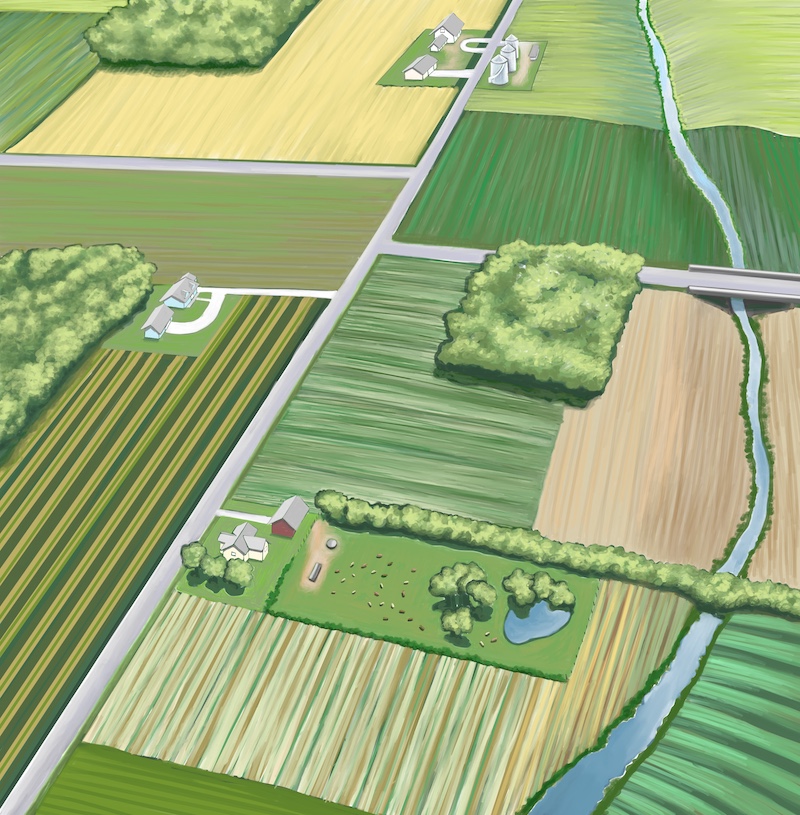
Although commonplace, eastern gray squirrels appear particularly sensitive to habitat fragmentation—the breakup of larger tracts of suitable habitat into smaller, patchy ones— and have declined in several parts of their range, primarily due to the reduction of mature forest and woodland. This is especially true within Illinois where the majority of original forest cover has been converted to uninterrupted agricultural land resulting in limited habitat connectivity.
A recent collaborative research effort using eastern gray squirrel genetic samples from Illinois—including Alexander, Champaign, Cook, DuPage, Kane and Lake counties—and 11 other U.S. states and three Canadian provinces investigated the impact of urbanization on the genomic structure of populations across their native range. All told, the researchers gathered 403 samples across 17 study areas within the eastern gray squirrel’s native range.
Squirrels used for the study were salvaged from roadkills, collected through pest control services, live trapped or hunted. Genomic DNA was extracted from each specimen through either tissue or blood samples and tested to determine the various proportions of their ancestry. Using this data, the team was able to test for genetic isolation by distance and look for genetic clustering across the sampled range. They tested among competing models to determine which landscape factors were most associated with gene flow.
The team’s genetic analysis showed moderate genetic diversity and low levels of inbreeding across their sampling locations. There were five major genetic clusters across the species range, with the middle portion of the species range—central New York, Pennsylvania, Virginia, North Carolina and Georgia—having the highest proportion of mixed ancestry.
The study found that forested land acts as a conduit for gene flow between populations while urban and agricultural land act as barriers. Additionally, genetic connectivity and migration was lower in agricultural areas, likely resulting from the lack of forested land in areas of extensive agriculture. The results suggest that forest presence is the most valuable landscape factor for influencing genetic differentiation between individual squirrels on a range-wide scale.
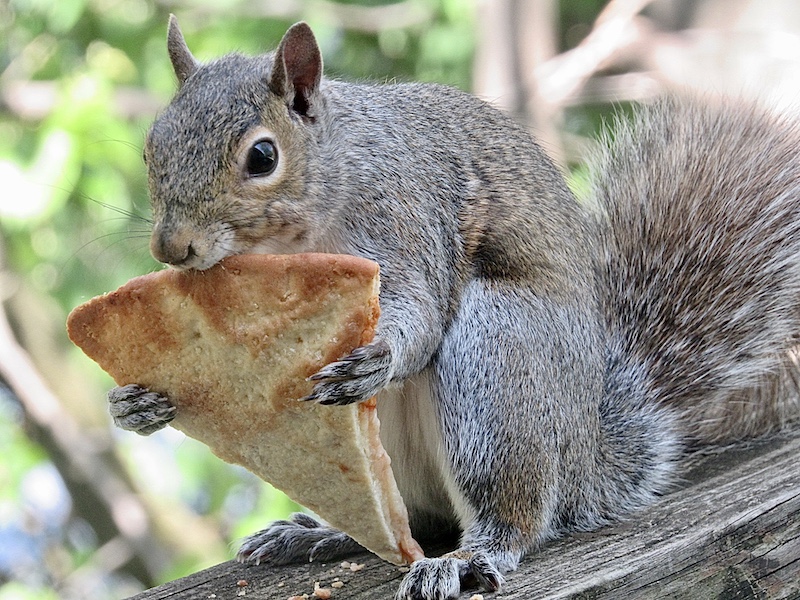
Eastern gray squirrel populations within urbanized areas had varied levels of gene flow and connectivity. This variance is best seen through comparing the high genetic connectivity of populations in cities along the Atlantic Coast with the limited connectivity in Midwestern cities. Suggesting that the availability of natural forested landscape around urban areas influences the genetic connectivity of urban populations.
Most importantly, the study demonstrated that forests serve as important corridors that facilitate migration and interbreeding, enhancing the genetic diversity of gray squirrel populations, whereas intensive agriculture can hinder this movement. The Illinois Department of Natural Resources is working towards restoring and protecting natural habitats across Illinois, helping ensure that these species can continue performing their vital roles within the ecosystem.
Bethany Warner is a recent graduate of the University of Illinois, with a Bachelor of Science in Animal Sciences. As an undergraduate student, she worked for the Illinois Natural History Survey within the Carnivore Ecology Lab, Human Dimensions Research Lab, and Mammal Collection, and was awarded the Prairie Research Institute’s Undergraduate Research Award. She will be working on her Master’s Degree with the University of Illinois Natural Resources and Environmental Sciences in the fall of 2025 studying the effects of controlled forest burning frequency on southern Illinois mammal populations.





Prześlij pytanie do autora