
An American dog tick waits for a passerby for its next meal. Photo by iNaturalist, novapatch, https://www.inaturalist.org/observations/219647484

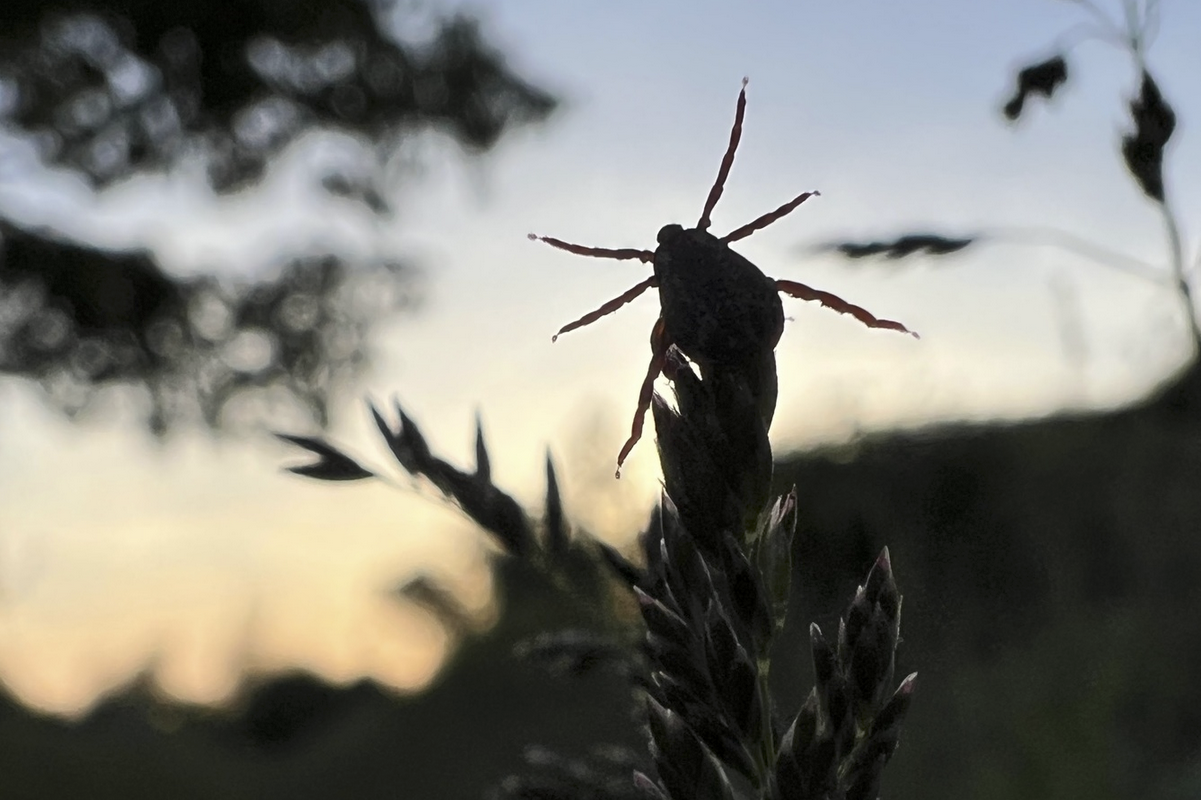
An American dog tick waits for a passerby for its next meal. Photo by iNaturalist, novapatch, https://www.inaturalist.org/observations/219647484
A day in the field or a long walk through the woods or prairie does one wonders—just remember to do a tick check when you return home. As a reminder of how to keep people and pets safe from tickborne illnesses “Be Tick Aware” park posters and trail signs are available to parks and recreational areas statewide. The signs were developed as part of a collaborative initiative between the Illinois Lyme Association (ILA), Illinois Department of Public Health (IDPH) and Illinois Department of Natural Resources (IDNR).
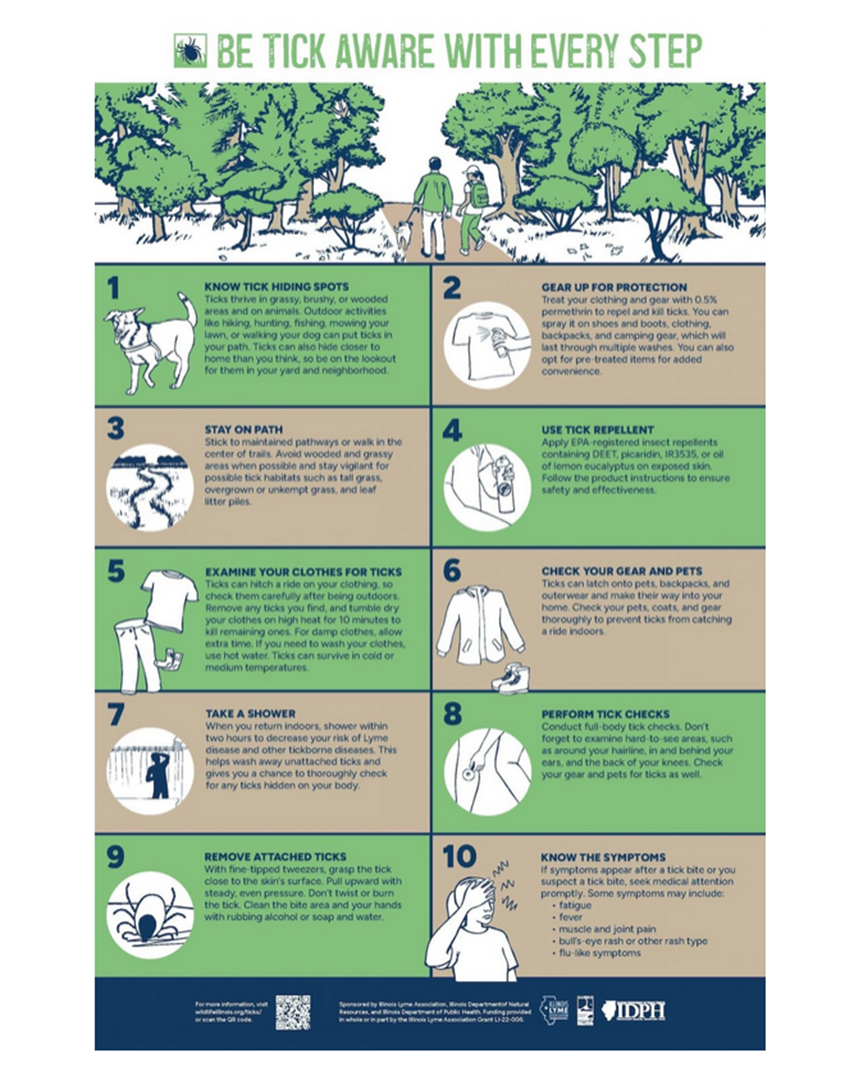
This educational campaign is designed to raise awareness about ticks and the potential illnesses they may carry, including Lyme disease.
According to the ILA, these species of disease-causing ticks have been found in Illinois:
“About 40 percent of Illinois deer ticks carry Lyme disease,” said Jennifer Russell, executive director of ILA. “They can also transmit other types of bacteria, viruses, and parasites, which makes them a significant public health concern.”
The signs and posters share 6-10 simple prevention tips that outdoor enthusiasts, families and pet owners can easily incorporate into their outdoor routines to reduce the chances of a tick bite. You can learn more about the signs on the Wildlife Illinois website.
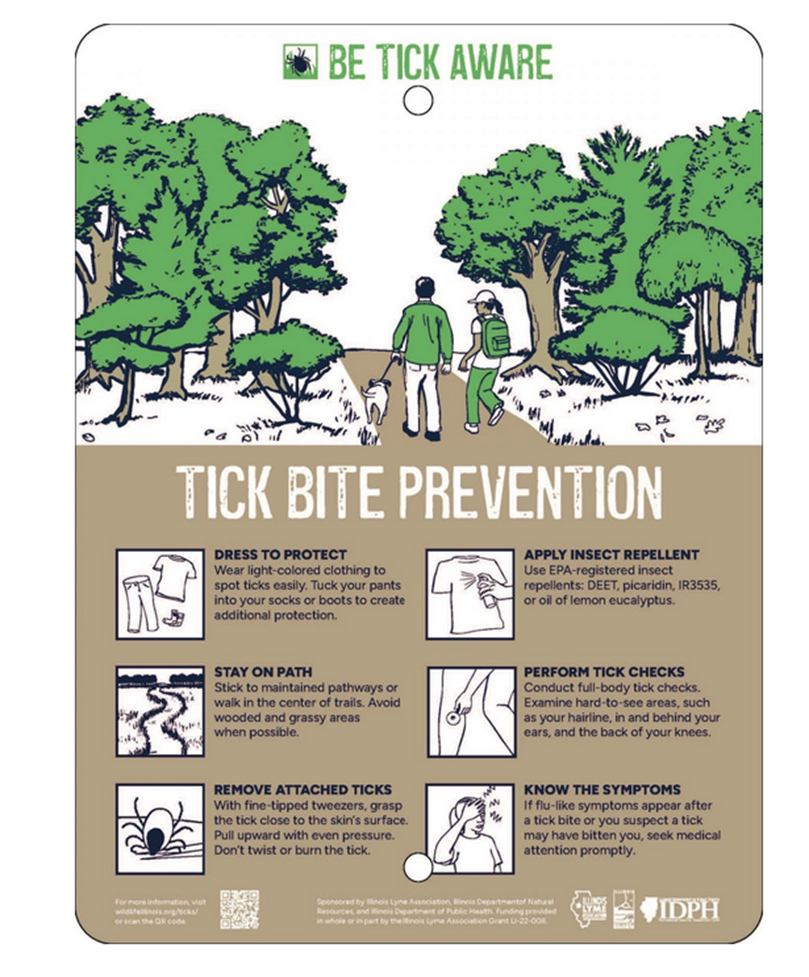
“We’ve already had some county health departments request signs,” Russell said. “We’re eager to get this information out to as many people as possible, so we’re excited to see such a positive response to the project.”
The “Be Tick Aware” signs are available at no cost to qualifying parks, nature centers and community organizations throughout the state. To learn more about the campaign or request signs for your site, visit: www.illymeassociation.org/request-trail-signs
You may also contact: info@illymeassociation.org
In addition to the “Be Tick Aware” page, another source of information about ticks, as well as spiders, wasps, and other insects, can be found on another new page on the Wildlife Illinois website. Illinois is home to many types of arachnids and insects, including ones that are beneficial, others that are considered pests and some that are invasive species.
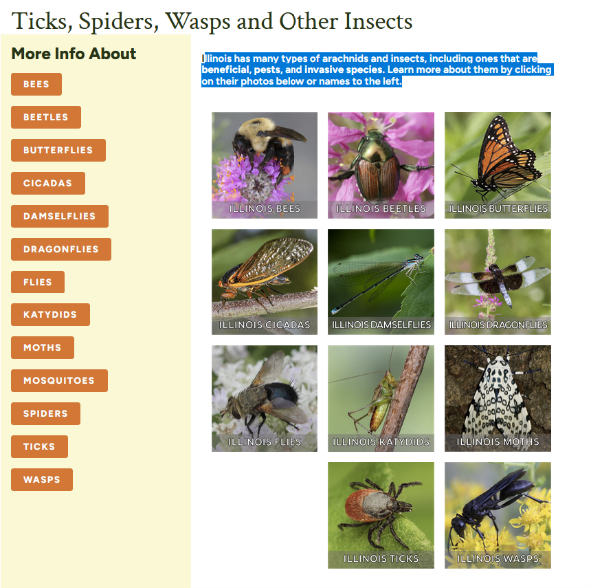
People tend to have a lot of questions about these small creatures, especially wasps, mosquitoes, spiders and ticks. You can learn more about each of them by clicking on their photos or selecting them from the menu on the left side of the page. The page also has a list of additional resources.
“Taking a few simple precautions before we head out into nature can help us avoid a tick-borne illness.” Mike Wefer, IDNR Wildlife Resources Division
Laura Kammin jest specjalistką ds. zasobów naturalnych w National Great Rivers Research and Education Center. Wcześniej pracowała w Illinois-Indiana Sea Grant, University of Illinois Extension, Prairie Rivers Network oraz Illinois Natural History Survey. Tytuł magistra ekologii dzikiej fauny uzyskała na University of Illinois w Urbana-Champaign.







Prześlij pytanie do autora