
Photo by Patty Gillespie.

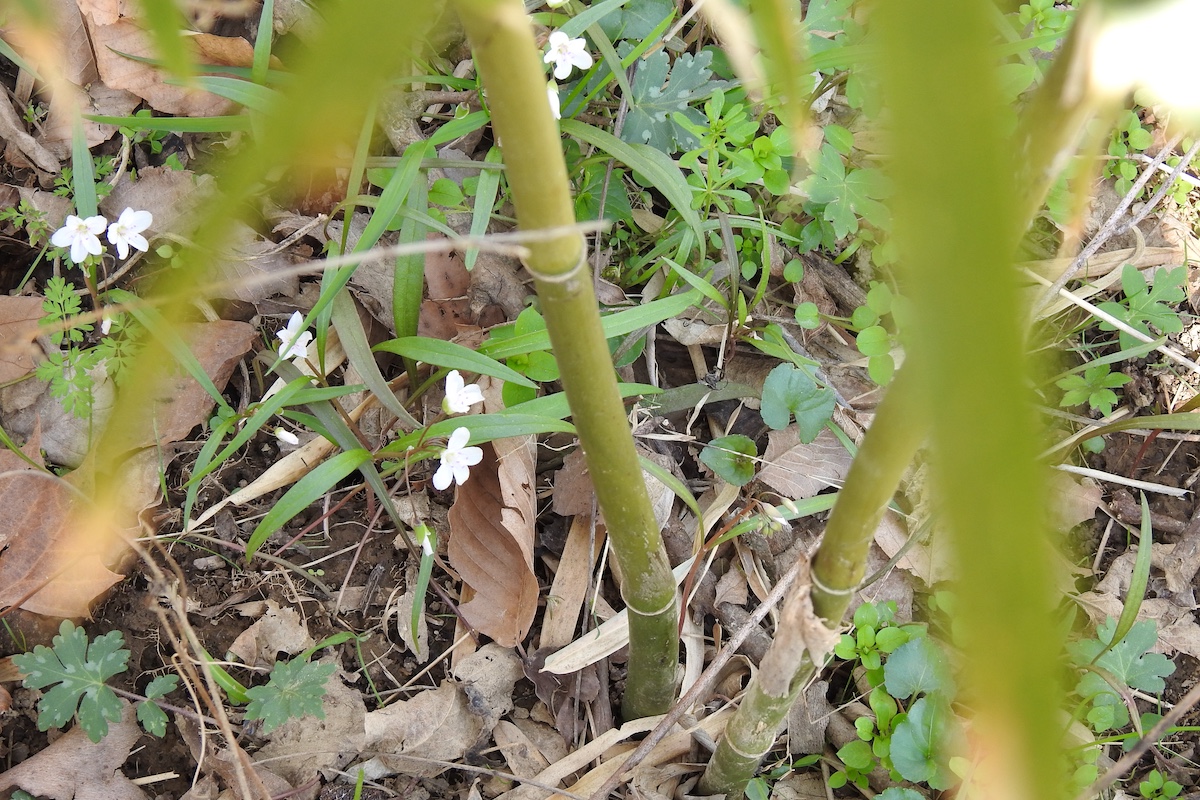
Photo by Patty Gillespie.
“Bamboo? In Illinois?” I questioned my own perception as I maneuvered myself with difficulty through a dense stand of stiff grass-like plants. The stems stood tall (some more than 8-foot tall), straight and erect like wooden poles but were jointed and bore no bark. Leaves, green parallel-veined lanceolate-shaped, brushed against my upper torso. I was hiking through the Shawnee National Forest with a depleted water bottle and an empty tummy. Tired of traversing hill and dale – rather, high ridge and deep ravine – and eager to return to my vehicle, I had decided upon a route that ran parallel to Lusk Creek. I remembered that there, situated between steep hillside and sheer creek bank, was a wide ledge. An easy hike, I thought; but I hadn’t anticipated encountering this vegetative obstacle.
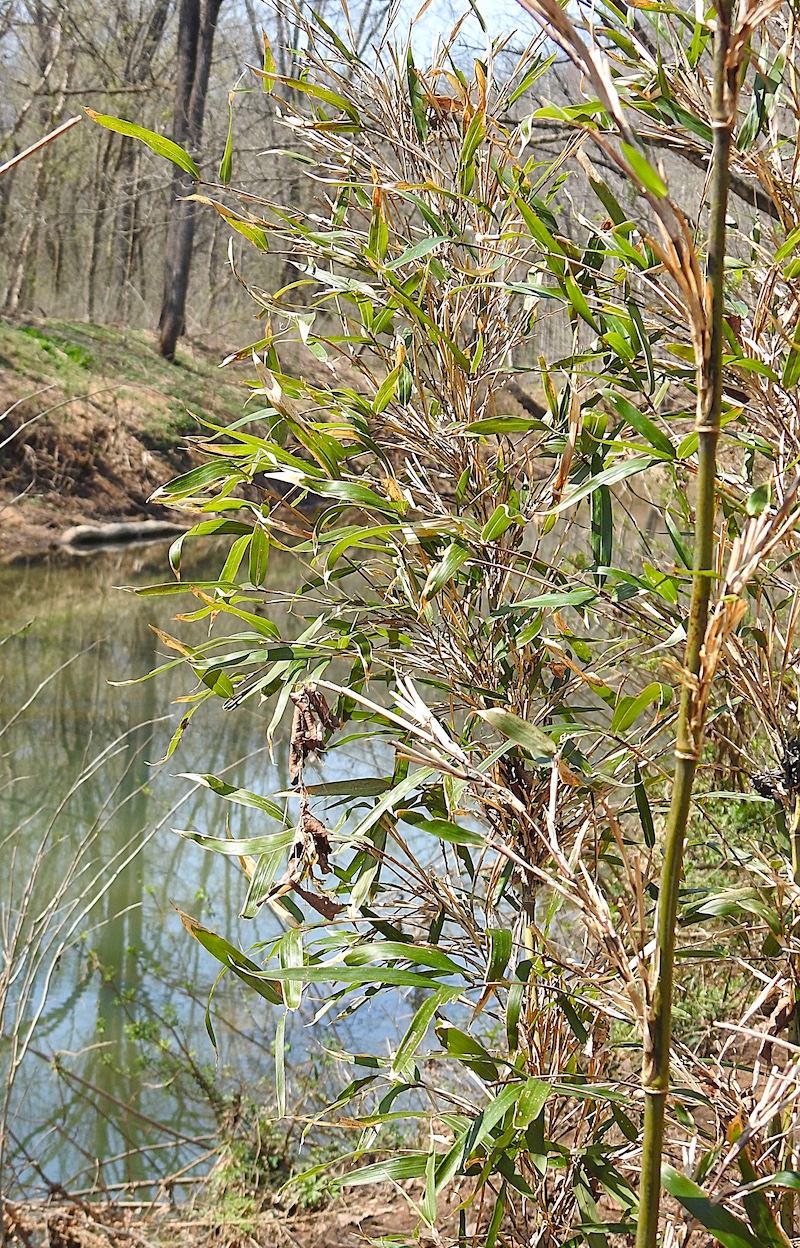
“That was giant cane (Arundinaria gigantea), also called river cane, North America’s native bamboo,” announced my son, Bob Gillespie, when I told him of my encounter during our trip home. “In the lowlands of southeast Missouri where I did research, years ago, there were once stands of cane, called canebrakes, which occupied hundreds of acres of bottomland terrace,” added Gillespie.
“Interesting,” I responded half-heartedly; but then from out of the car’s radio came the deep, mellow voice of Tennessee Ernie Ford enouncing, “I was raised in a canebrake by an ol’ mama lion …” Of course, that line in “Sixteen Tons” was intended to paint the image of a coal miner as a strong, pugnacious man, but for me the words ignited my curiosity about giant cane.
I discovered that giant cane was one of the most important plant resources for Native Americans living in southeastern United States before Euro-American settlement. The primary culms were gathered from canebrakes and used to construct village structures. During studies of the Mississippi mound builders, archaeologists discovered that cane was utilized as wattle while mud served as the daub during construction of huts. Impressions of split cane, long since rotted or burned away, remained in the rock-like hardened mud found during archaeological excavations.
One historical account describes a 10-foot-high palisade made of giant cane with 1-inch spacing between the cane stems. Such palisades, which might surround an entire village, proved a defensive fortification. When warring time necessitated evacuations, a dense canebrake would serve as a place of concealment and an obstacle to enemies.
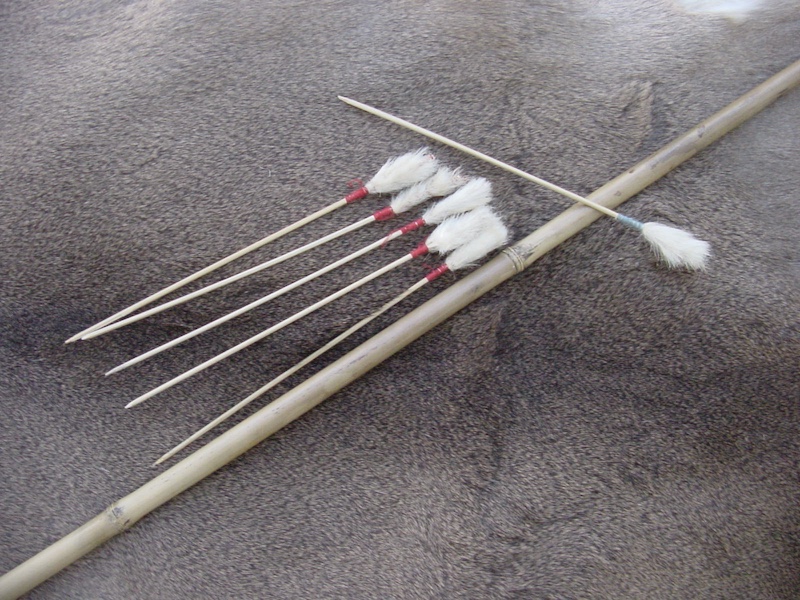
Canebrakes served as habitat for wild animals which were hunted by Native Americans for food. Southeastern tribes used blowguns made from cane to hunt small mammals and birds. To produce the hollow tube for the blowgun, the internodal septa were removed from selected straight culms of giant cane. Even the darts were often made from slivers of cane.
When aboriginal Americans used the atl-atl, a device designed to increase the velocity of a thrown spear, cane was implemented. A cane stem of about 6 feet in length was straightened through a heating process and fletched with feathers. This cane shaft, as a section of the spear, was stiff but flexible enough to spring from the atl-atl.
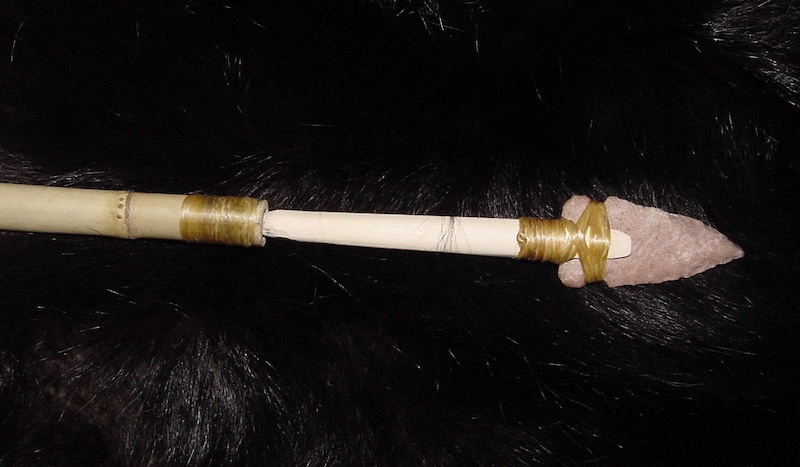
When archery tools were developed, many tribes crafted cane arrows. Hernando de Soto’s conquistadors learned the hard way that those cane arrows were highly effective. An account was found within a journal entry by one of de Soto’s soldiers who told of arrows being made of a certain cane, like reeds, very heavy, and so stiff that one of them when sharpened can pass through a target.
For tribes living in alluvial floodplains where fish provided an important dietary component, cane was used to make fishing spears and traps. Remains of fishing nets, composed of cane, were recovered at archeological sites. Also, parts of the cane plant itself supplied food. New cane shoots were tender enough to be mixed with other wild vegetables and eaten raw as salad or cooked as stew.
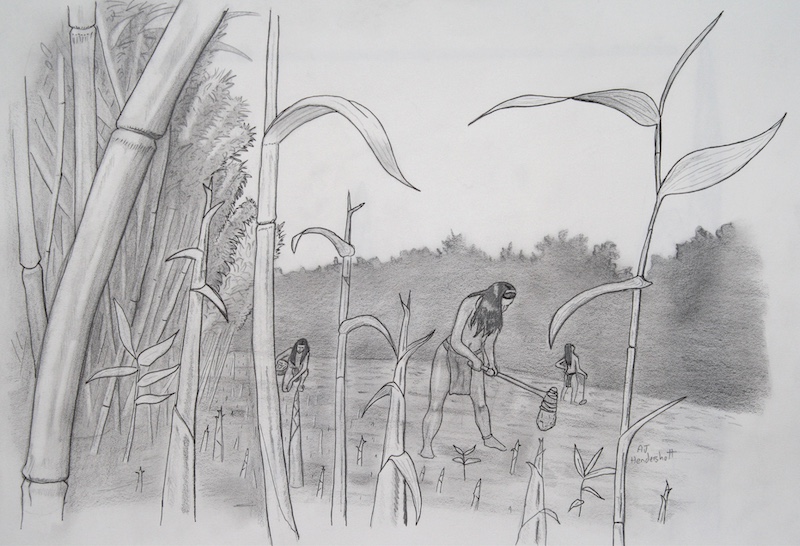
Truly, giant cane entered into the everyday lives of certain of America’s indigenous people, maybe even as a catalyst of culture. Harvested cane enabled the construction of domestic items: furniture, baskets, musical instruments and even personal adornments. Perhaps, aboriginal people even conducted tested management practices to maintain healthy canebrakes.
However, following the Euro-American settlement, cane became less significant in the lives of indigenous Americans. Settlers offered trade goods such as steel knives, metal pots and firearms. As Native Americans recognized those as superior, they discontinued use of some cane-constructed articles. Also, expansive canebrakes drastically declined as settlers allowed their domestic livestock to graze too aggressively on cane and as settlers cleared canebrakes and converted acres to crop fields.
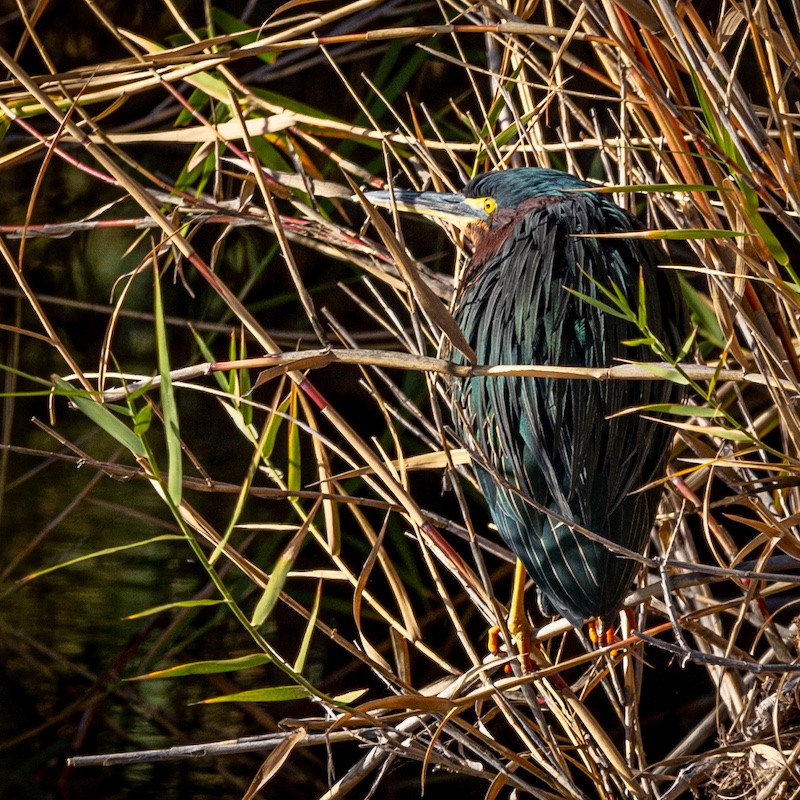
Audubon, writing in 1830s about Kentucky, commented that acts connected with the progress of civilization reduced cane to small limits. During the 1800’s in Tennessee, canebrakes were restricted to the Mississippi River bottoms. However, historical accounts do suggest that large canebrakes in remote river bottoms did persist well into the 20th century. Now in southern Illinois, giant cane occupies a niche as an understory plant in bottomland and riparian forests.
“Praising Cane,” was the title I read as I flipped through an OutdoorIllinois magazine. There on the article’s first page was a photo of a modern-day youth wearing a straw hat and holding a cane fishing pole. Of course, tugged from my memory was the mental image of Huck Finn setting cane poles to catch catfish along the bank of the Mississippi River between Missouri and Illinois. (Mark Twain’s Adventures of Huckleberry Finn). The photo’s caption suggested that even on the hottest of summer days, a cane pole and some freshly dug worms can offer fun. I decided to put that supposition to the test. I gathered giant cane and prepared the long culms as suggested by cutting each at a joint so the end would be closed to keep water out. My students at Ballard Nature Center’s youth day-camp selected their cane poles, tied on string, attached hooks and baited hooks. While we fished, I did some storytelling, spinning fact-based tales of canebrakes. Hey, we even caught a few fish! Little did the children know that while they were having fun, I was subtly raising their awareness of cane’s ethnobotanical significance.
Not ready to exit the canebrake? Navigate to the companion article, “Exploring the Canebrake.”
Personal communications: Bob Gillespie, “Anthropogenic Influence of Canebrake Formation in Southeastern Missouri Lowlands,” Missouri Department of Conservation, 2012; and A. J. Hendershott, aboriginal Americans’ cane-constructed tools.
A.J. Hendershott. “Canebrakes: Missouri’s Bamboo Forests,” Missouri Conservationist, Oct 2002
Steven G. Platt, Christopher G. Brantley and Thomas R. Rainwater. “Native American Ethnobotany of Cane (Arundinaria spp.) in Southeastern United States: A Review,” Castanea 74 (3):271-285. September 2009
Steven G. Platt and Christopher G. Brantley. “Canebrakes: An Ecological and Historic Perspective,” Castanea 62(1):8-21. March 1997
Rich Wagoner. “Praising Cane,” OutdoorIllinois August 2007
For years, Patty Gillespie shared her enthusiasm for language and nature and got paid for it at a public school and at a nature center. Now she plays outdoors as often as she can and writes for the sheer joy of it.





Prześlij pytanie do autora
Question: This was an excellent article. Do you know of any source of cane seed? I lament the loss of the cane breaks. I live in Moline Illinois with my Wife in the land of Blackhawk..