
All photos by Patty Gillespie unless otherwise noted.

All photos by Patty Gillespie unless otherwise noted.
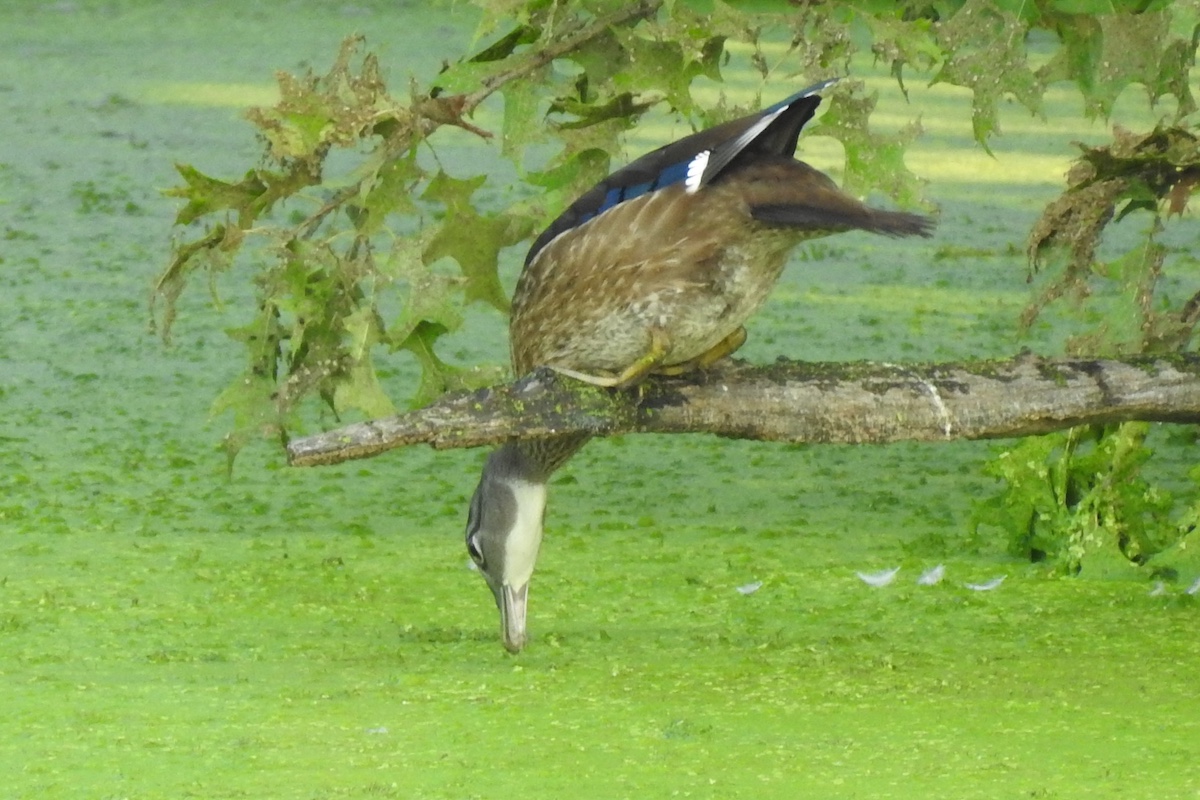
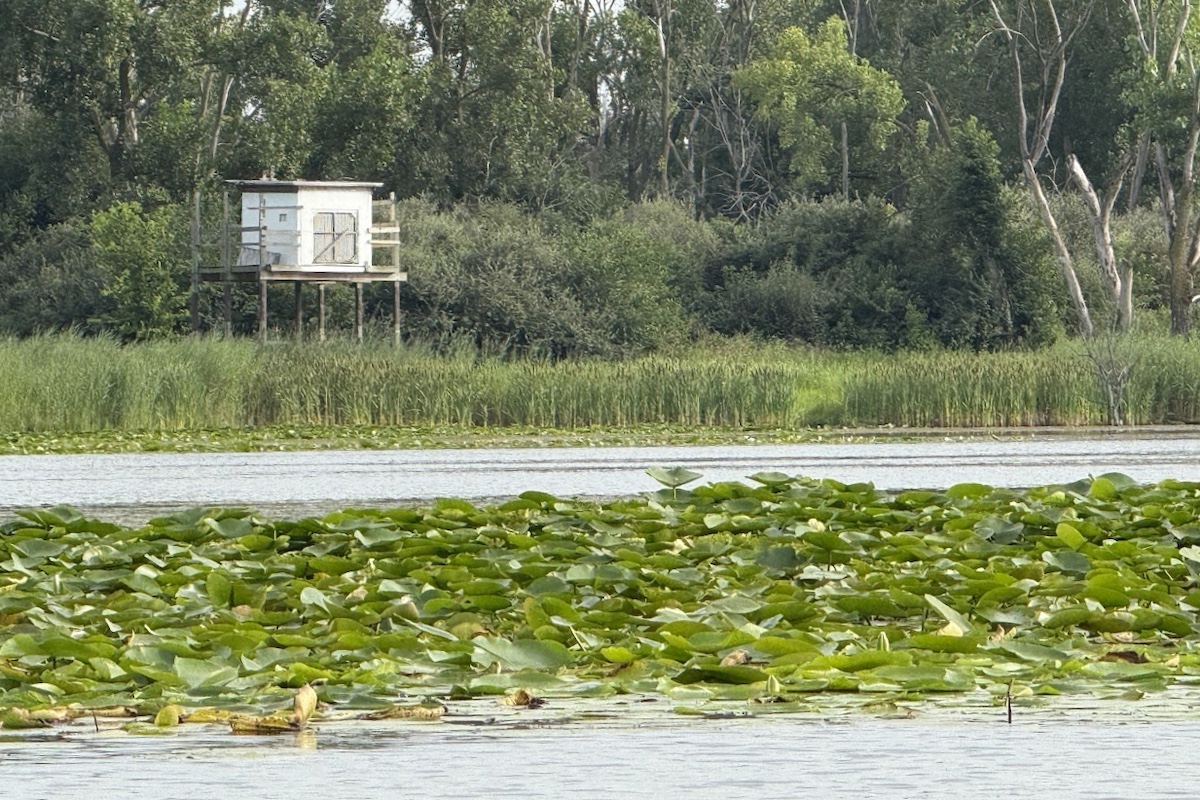
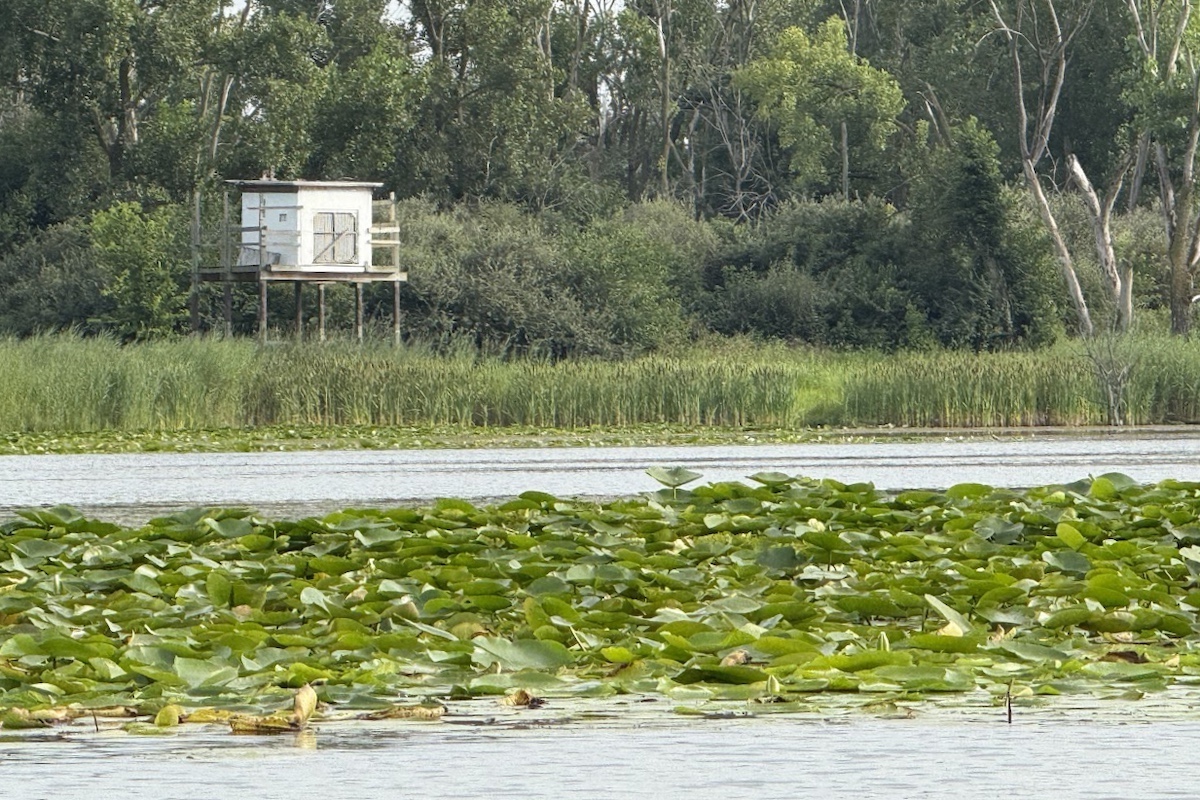
While the mosquitoes in the blind were hoping to fill their bellies on us, we were hoping the wood ducks on the lake would decide to fill their bellies on the corn which we had scattered beneath the drop net. We sat waiting, Jim Gillespie (then, site superintendent at Sam Parr State Fish and Wildlife Area) and I. Our plan was to capture, examine, band and release the ducks; thereby, contributing to a waterfowl research project. Finally, when it was clear that the wood ducks had decided to ignore our food offering, I whispered, “We had so much luck in August. What’s happened?”
“Acorns have begun to ripen and fall from the oaks around the lake. About this time each year the wood ducks turn up their noses to our bait,’” Gillespie responded.
“So, come September, the wood ducks say ‘Acorns – It’s What’s for Dinner,’” I quipped.
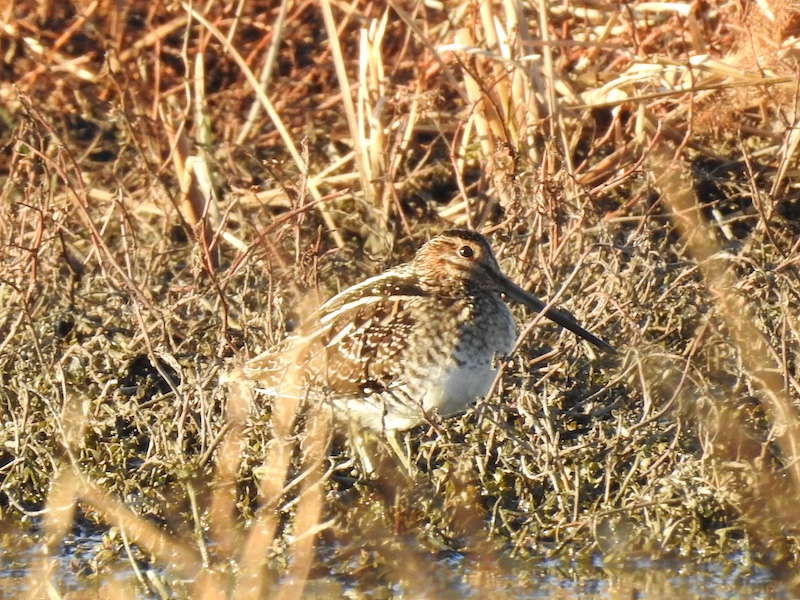
I could understand the birds’ taste for acorns. While doing research about acorn eaters for my article “A Society of Acorn Relocators,” I discovered that acorns are even suitable for the human palate if the tannins are washed away. However, recently, I questioned a certain bird’s culinary choices. A Wilson’s snipe was repeatedly probing into the mud along the shallows of a pond. “What on earth does a snipe find so delectable in the muck and the mire?”
Then through my zoom lens, I saw the entrée. A tiny crayfish was held tightly at the tip of the snipe’s slender beak. For a robin-size bird that beak seemed absurdly long (about 2.8 inches long), a real “schnozzola.” I learned that a snipe’s beak is tough, able to withstand being poked vigorously into moist soil. Yet, the beak’s tip is sensitive, allowing the bird to detect its prey deeply hidden, and flexible enough to allow the bird to grasp a muddy morsel (maybe an earthworm, insect larvae or aquatic vegetation) and move it mouthward.
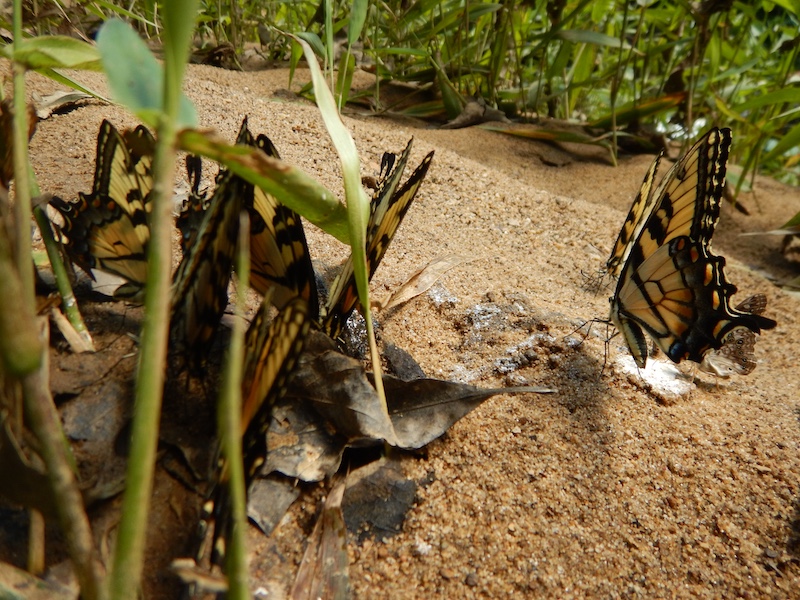
Speaking of creatures that probe for food, I must include the butterfly. Now there is a proboscis of great length; of course, you might be tempted to call it “the butterfly’s tongue.” “Straw” would be the more appropriate term. A butterfly’s taste buds are most prevalently located on its feet. The butterfly uncoils its long tubular cephalic appendage, probes the floral tube, locates the nectar, and sips. Of course, butterflies would never slurp noisily, but they have been observed sopping up spills, gathering minerals from mud puddles or dung or even carrion. When a whole group is so engaged, the activity is called “puddling.”
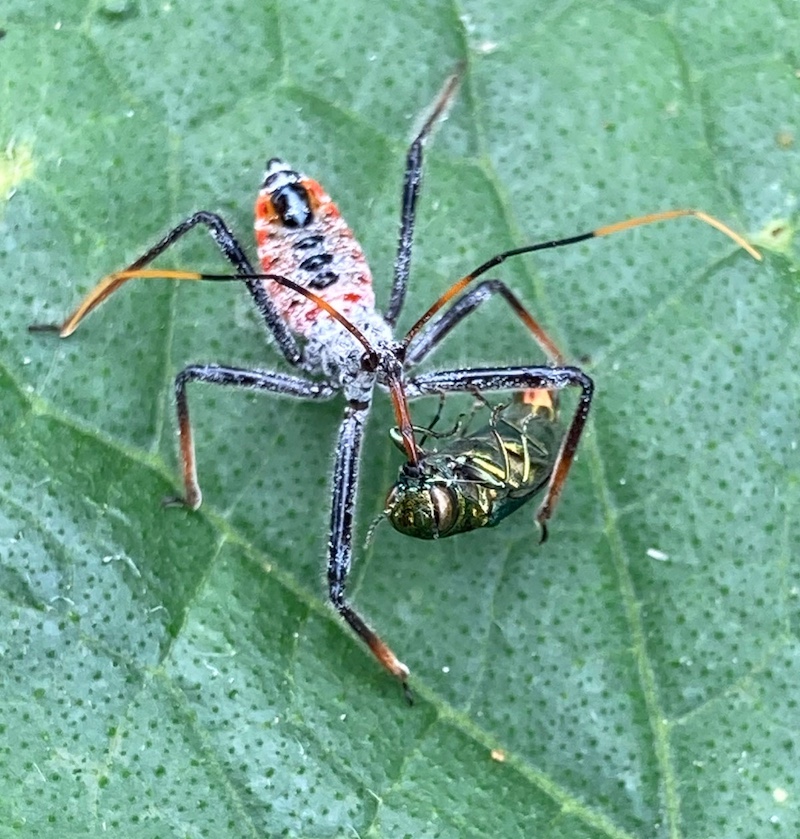
Another creature that sups from a puddle is the assassin bug, but the puddle is actually the insides of its prey (usually another insect). The assassin bug jabs its rigid proboscis (called a beak) through an insect’s exoskeleton and injects digestive enzymes. Then while its prey is thus immobilized, the assassin bug slurps up the liquified body contents through its straw-like beak.
Generally, “beak” is a term associated with birds, and beak types vary considerably among birds. We might ponder whether it is the bird’s beak that dictates the bird’s eating habits or the bird’s eating habits that have dictated the bird’s beak evolutionarily.
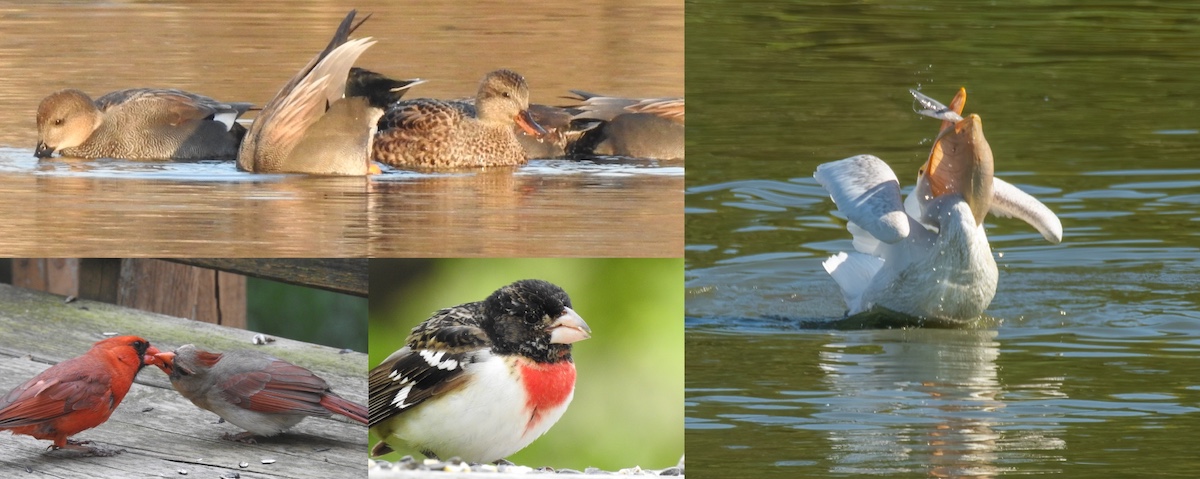
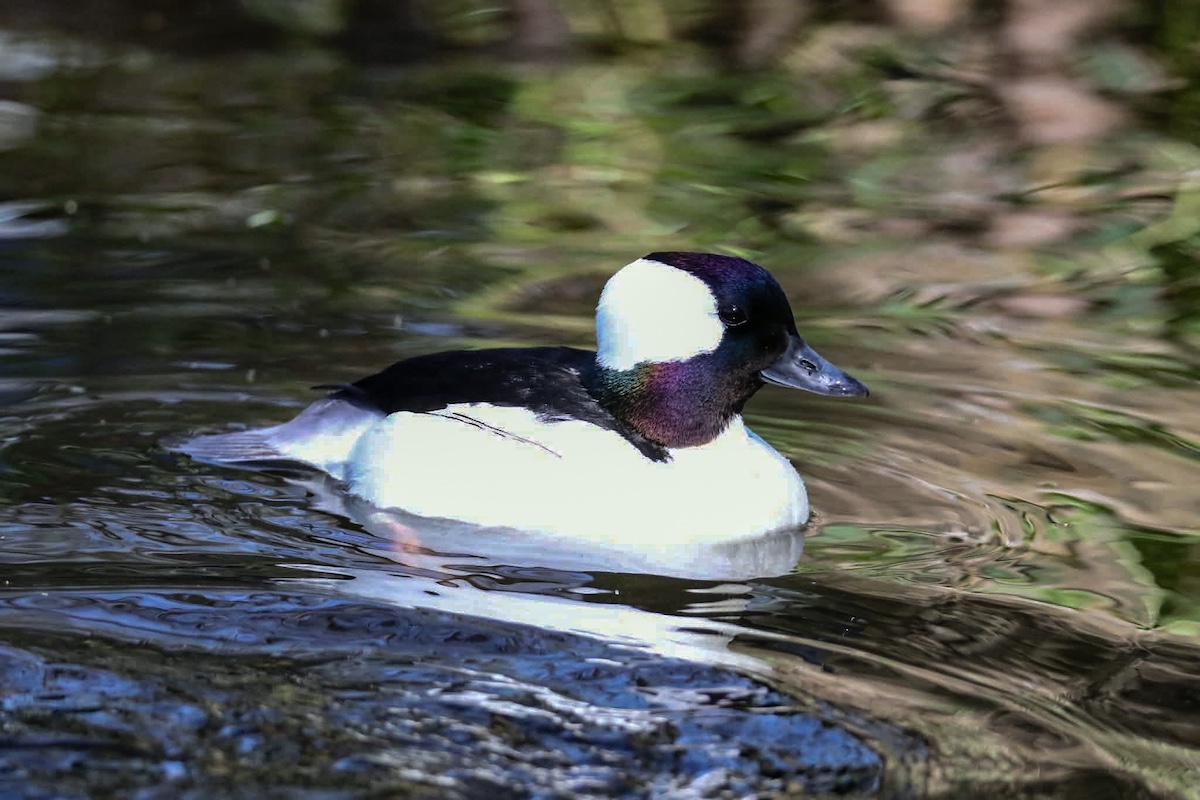
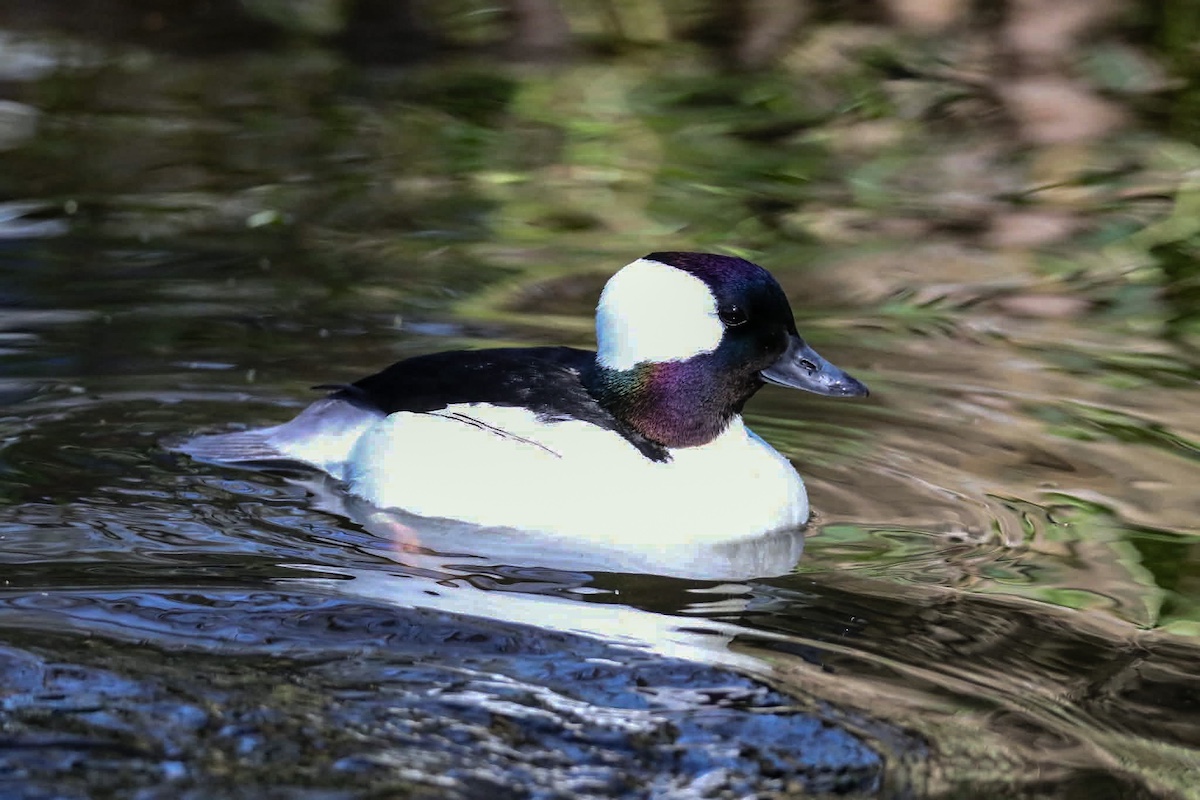
A Nashville warbler’s tiny, pointed beak pincers a caterpillar from a leaf high in an oak tree. A red-tailed hawk’s sharp rasp-tipped curved beak rips the flesh of a rabbit. With a flat, round-tipped bill, a gadwall duck dabbles for aquatic vegetation and macroinvertebrates. For dining on berries and seeds, just right is the short, stout beak on a cardinal or finch or grosbeak – yes, “grosbeak” (French gros bec: large beak). Then there’s the white pelican’s beak, now that’s a fish-catching device! Yet, if the pelican gulps before situating its catch in a position to slide headfirst down its esophagus, the pelican can strangle.
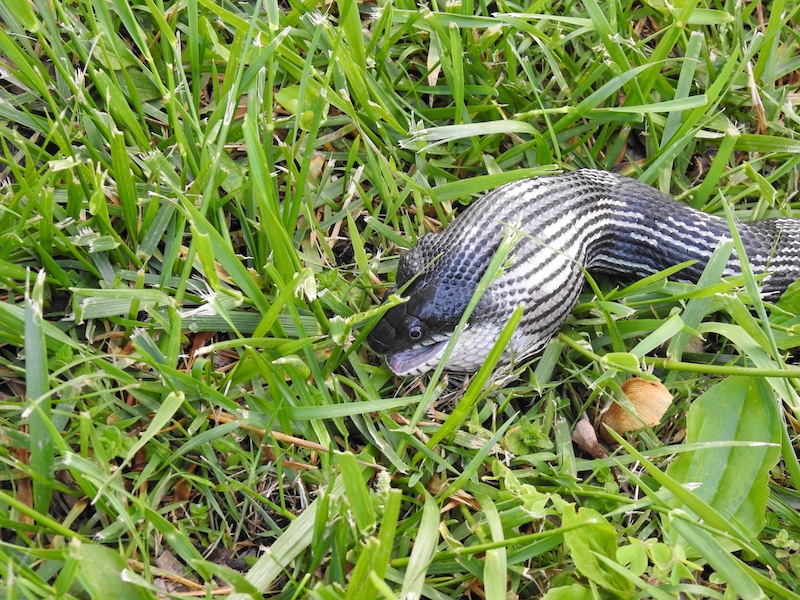
One creature who seems not to have to worry about choking on its food is the snake. I spied a ratsnake with its body swollen greatly, just behind its mouth. “Did the snake bite off more than it could chew?” It had indeed swallowed prey that was bigger than the size of its mouth and larger than the circumference of its body. The ratsnake had flexed the stretchy ligaments in its unfused lower jaw, moved joints in its skull, walked the prey into its body using the back-and-forth motion of its lower jaw (not a chewing action) and had stretched its body’s elastic skin like a girdle.
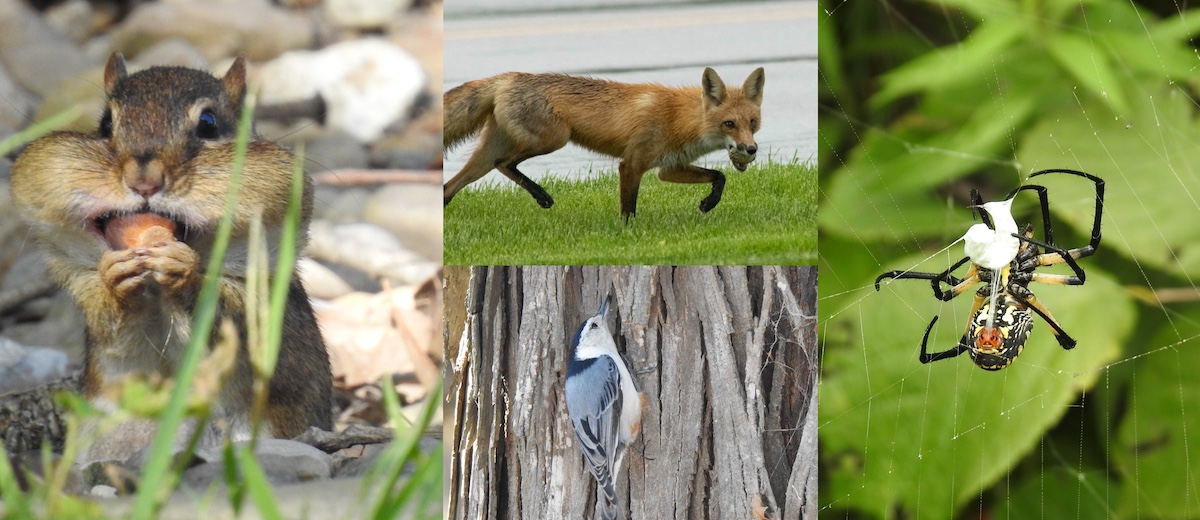
In the animal kingdom there is no Old Mother Hubbard cupboard nor a refrigerator, but the animals make do. The chipmunk stores nuts and seeds in a cache within its burrow. The red fox, who might not wish to jinx a good hunting streak by stopping to eat, digs a shallow hole and covers its kill with dirt for later pick up. The white-breasted nuthatch stashes its sunflower seed behind a piece of bark. Oh, what a tangled web the agriope spider weaves when first it practices to delay. To postpone consumption of an insect ensnared in its web, the agriope spider, often called garden spider, wraps its arthropodal delicacy in a silken package. The tomato hornworm (a sphinx moth caterpillar) serves as a living, moving food storage receptacle for ichneumon wasp larvae. The female wasp deposits her eggs within the caterpillar’s body, thereby creating a perfect after-hatching snack for her youngsters. As the larvae become satiated and then pupate, the depleted caterpillar becomes porcupined by their cocoons.
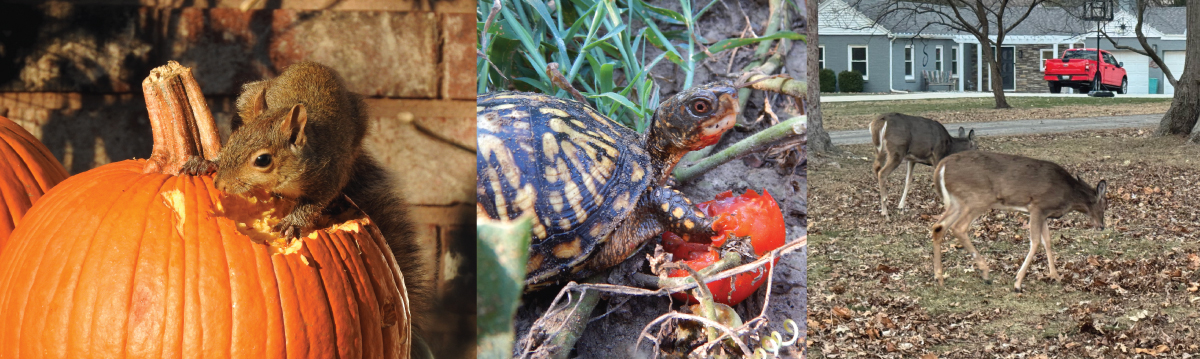
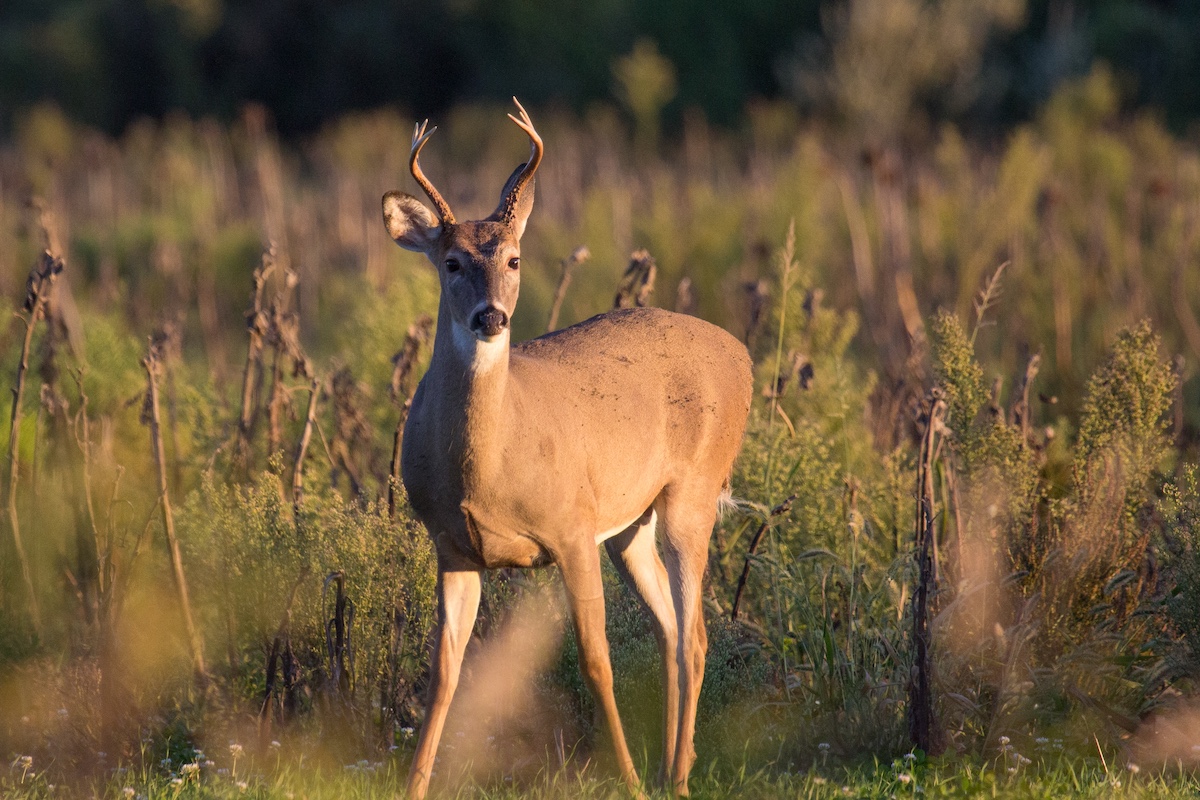
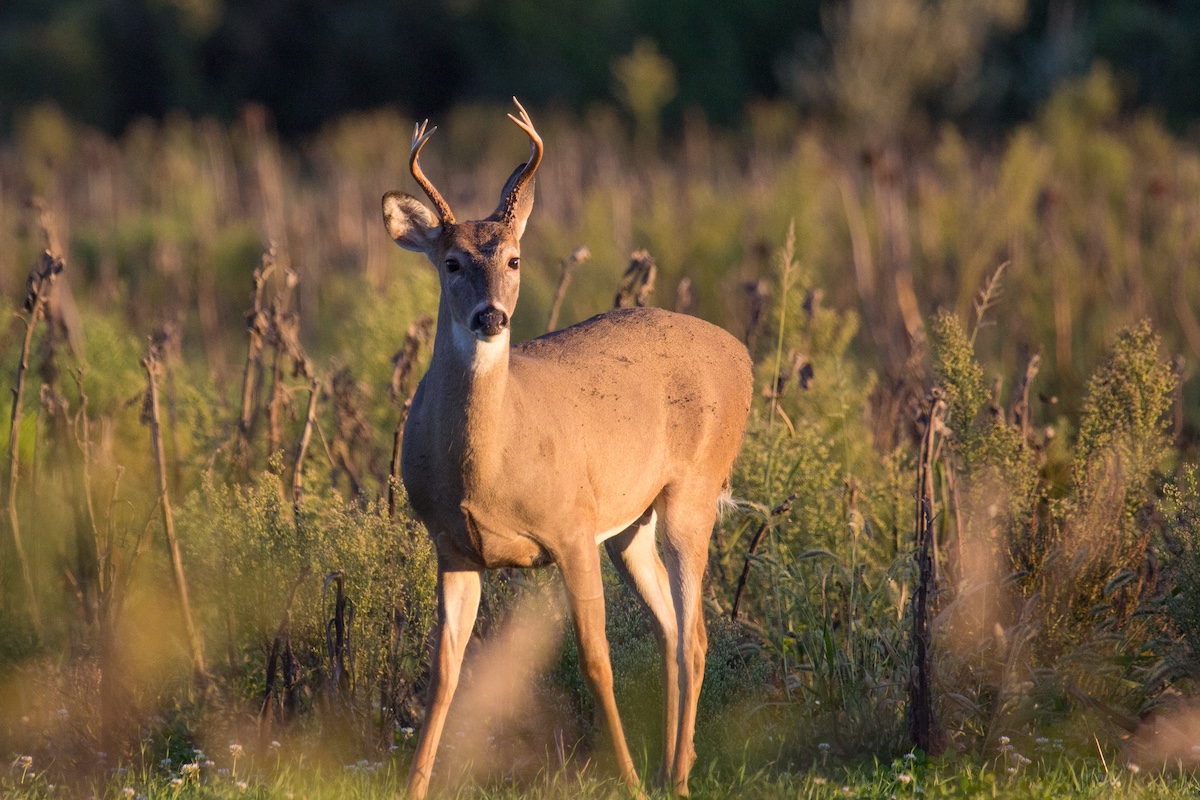
Human activities rewrite the menus. The Halloween decoration, a pumpkin on the stoop, is reduced to rubble by the hungry gray squirrel. In the garden an eastern box turtle finds a nice ripe tomato to its liking. Unfortunately, in the human-influenced landscape the ever-increasing presence of non-native bush (or Amur) honeysuckle shrubs offer berries high in carbs but low in nutrition (the carbohydrate-rich berries do not provide the fat content required by birds, especially migrating birds.) I wonder if tulips provide adequate nourishment; I’ve heard they’ve become a staple for suburban white-tailed deer. Eastern wild turkeys scratch for corn in and around our cattle trough, gobbling it up despite its being slimy with cow slobber.
There is danger for wildlife when they eat from human hands, so to speak. When a greater number of animals than usual pass through an area because someone has set out a “buffet” for them, chances at disease transmission are heightened. An animal which has been fed repeatedly may lose its fear of people and soon become labeled “a nuisance.” So, what to do to assist wildlife? Support organizations that manage wildlands or establish habitat by planting native plants. And, as often as you can, enjoy observing wildlife and their wild table manners, but do so unobtrusively.
For wildlife, obtaining sustenance is hard work. Just think, an eastern whip-poor-will leaves Illinois in autumn and flies clear to Central America just to feed on moths. Yes, animals grab, graze, dig, dive, lurk, lure, attack, snatch, poke, pounce, creep, crawl, shimmy, shake, and jump and jive; just for a bite to eat.
Rules regulating feeding wildlife – The Illinois Administrative Code 17-635 and the Illinois Digest of Hunting and Trapping Regulations
For years, Patty Gillespie shared her enthusiasm for language and nature and got paid for it at a public school and at a nature center. Now she plays outdoors as often as she can and writes for the sheer joy of it.


Prześlij pytanie do autora
Question: Share a similar story of a black rat snake that got into one of my bluebird boxes and devoured all five of the almost grown bluebirds. he was so gorged he could not get out of the entry/exit hole in the box. when I checked the box the rat snake was all wrapped around itself and completely filled the space in the box.